






W nawiązaniu do „Dwugłosu o sztuce i przyrodzie: kwiaty” Dominiki Kieruzel i Moniki Kostery

Tym razem tekst rozmowy artystki i naukowczyni społecznej daje poczucie, głębokie i zaciszne zarazem, bycia w domu. Oczywiście w domu z ogródkiem. Nieznane mi artystki i artyści, które poznaję dzięki Autorkom dwugłosu, spotykają się w nim (w tym domu) z twórcami z pierwszych stron dobrych podręczników. Prerafaelici, Monet, Van Gogh…Biografia tego ostatniego świetnie opisana w poświęconym mu tomiku pióra zapomnianego dziś niestety francuskiego biografa i filozofa Henri’ego Perruchota (1917- 1967). Słynął z tego, że na kartach biografii malarzy jego autorstwa każde zdanie wynikało ze źródeł, a jednocześnie była to piękna literatura. I ciekawa filozofia „przecięcia” twórczości z codziennością właśnie. Czyli zupełnie jak dialogi Dominiki Kieruzel i Moniki Kostery. Chyba wszystkie lub prawie wszystkie książki Perruchota zostały przetłumaczone na język polski. Miał wyraźnie bardzo dobrych tłumaczy. Jak przystało na PRL tłumaczenia kolejnych tomików ukazywały się w sporych odstępach. Wyobrażam sobie jak pasjonaci pisarstwa Perruchota czekali na każdy tomik. Cierpliwość zupełnie taka, jaką wymagają kwiaty od ludzi, którzy chcą z nimi obcować. Skompletowałem sobie te tomiki do domowej biblioteczki. Wymagało to cierpliwego polowania po antykwariatach. Ceny okazały się groszowe. Gdy się budzę widzę ten zbiór na półce. Jeszcze jestem przed ich pełną lekturą. No tak… to znowu jak niecodzienne kwiaty i jak Dominiki z Moniką dialogowanie. Trzeba cierpliwie czekać, czasem „polować”, a otrzymuje się coś pięknego i nieprzeliczalnego na pieniądze. I dostępne dla każdego, kto poświęci temu wystarczająco dużo uwagi (wystarczająco dużo, to znaczy całą, bo tylko tak warto czytać „Dialogi o sztuce i przyrodzie” i tak patrzeć na kwiaty). U Perruchota przyroda odgrywa ważną rolę na wspomnianym przecięciu życia i twórczości. Życie- natura- twórczość. To obszar, cudowna kraina, którą wyznaczają i wypełniają teksty przywołanych przeze mnie Autorek. Bo przecież nie jest wcale trywialne zdanie, iż żeby zmieniać świat trzeba mieć dom. 

Na oddzielne podkreślenie, a także oddzielne podziękowanie dialogującym Autorkom należy się z pogłębienie problematyki rezonowania. Teraz to już mogę mówić o tej koncepcji studentom oraz praktykom, a co najważniejsze mogę próbować praktyki rezonowania, nie tylko intuicyjnie.

Niezwykłe są kategorialne ramy rozmowy o kwiatach. Wyznaczają je bezwstydność na początki i niewinność na końcu tekstu. Bingo! Tak właśnie można przeciwstawić się temu, co złe i temu co wymaga pilnej naprawy. Ukwiecony dom nie jest po to, by się w nim zamknąć, ale by czerpać z kwiatów bezwstydność i niewinność jako siły zmieniania światy.

A wspomniany przez Autorki Witkacy na dialektycznej zasadzie przywodzi mi na myśl Chwistka. Dla niego twórczość to nie tyle metafora natury, ile raczej techniki (w sensie centralnego przejawu kultury nowoczesności). Ciekawe czy ten aspekt pojawiał się w zaciętych sporach między nimi?

Mam takie humorystyczne doświadczenie. Gdy „mój” Paweł (średni syn, teraz student archeologii UKSW) wchodził z pasją w świat sztuki, w warszawskim Muzeum Narodowym była słynna wystawa monograficzna Witkacego. Tłum ludzi, co bardzo źle wpływało na Pawła (wrażliwiec z głęboką dysleksją). Nagle przystanął przy obrazie, który mu się specjalnie spodobał…to była „Szermierka” Chwistka. Z kolei „moja” Karolcia (najmłodsze dziecię, praktykuje namiętnie malowanie, niezwykle wrażliwa w stylu nastoletnim) bardzo lubi Witkacego. I „jej”, to jest nasza wspólna wystawa Witkaca była… w Muzeum Archidiecezji Warszawskiej („nasze małe, ale fajne muzeum” jak mówi Karolcia) …kto by pomyślał, że właśnie tam. Nieprzewidywalne są drogi nie tylko twórczości, ale i drogi obcowania z nią. Tak jak drogi kwiatów i obcowania z kwiatami. 

Tomasz Ochinowski

Leon Chwistek „Szermierka”, 1919. Zdjęcie: Wikimedia Commons

Migration and Conflict in the Global South. What happens when the land you depend on can no longer sustain you?

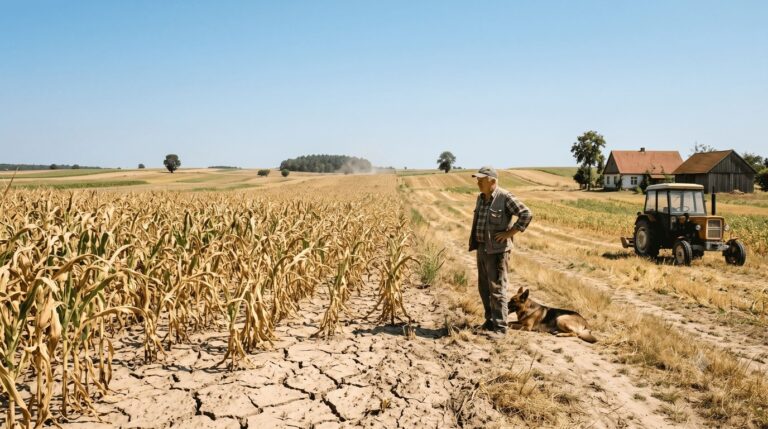
For millions across the Global South, this is not just a hypothetical question, but a daily reality. From the prolonged drought in the Sahel to the unending floods in Bangladesh, communities are being displaced, livelihoods destroyed and insecurity deepened.

While the world debates and conducts high-level forums disguised as opportunities to solve the problem, families in vulnerable regions face disastrous impacts everyday that lead to migration, conflict and uncertainty across the Global South.

Climate Change-Driven Displacement

In Sahel, traditional farming and subsistence practices once sustained by heavy seasonal rainfall have become nearly impossible because of irregular weather patterns that result in irregular rainfall cycles. These traditional farming systems that were passed down through generations can’t withstand prolonged seasons of droughts or sudden floods. This recurring pattern forces people to move from rural to urban areas in search of survival. These movements are always involuntary, they are an act of desperation. But urban areas, already strained, often lack infrastructure, resources and employment opportunities to sustain growing populations. This influx puts a huge pressure on sanitation and food systems, thus most informal settlers live under poor conditions, increasing vulnerability for both the urban and rural populations.

In Africa, Fatima, a farmer and a mother of four, survives on hopes and no food. Lack of enough rain makes it impossible to practice decent farming that once sustained her family. Therefore, her children often go to bed without food, and education becomes a luxury. This instability forces Fatima to migrate out of desperate need. Her movement is marked by uncertainty and loss, and reflects the growing reality in many parts of Africa, where climate instability causes women like Fatima to struggle for dignity and survival.

In Bangladesh, people are often displaced due to high water levels. Already barely surviving, communities are forced to move, ironically, by the same resource others long for: water. These displacements are often sudden, unplanned, and chaotic, pushing people into overcrowded urban slums where basic needs remain unmet. This imbalance reveals the cruel paradox of a warming world: too little in some places, too much in others, yet the suffering is shared.

Climate stress as a catalyst for conflict

Climate change erodes resources that are essential for survival and reasonable living. In Nigeria, farmers compete for arable land that was once used generously after prolonged droughts and erratic rainfall that have reduced fertile lands used for grazing and cultivation. This stiff competition for resources has led to tensions between crop farmers and herders, triggering a cycle of violence rooted in the daily struggle of survival. What was once a harmonious balance of co-existence has turned to a desperate fight for survival, intensified by a changing climate that neither side has caused but both are forced to endure.

In East Africa, the scarcity of resources has also led to overgrazing and deadly disputes over water and pasture lands. Some communities are displaced and forced to move because of droughts and land degradation, leading to deeper unrest. Others are left with no choice but to migrate entirely, abandoning ancestral lands in hopes of finding more hospitable conditions elsewhere. These displacements not only uproot families but also deepen social and economic instability, causing fragility across affected regions. The impacts of climate change here are urgent, tangible, and deeply personal.

The tragedy is crystal clear: countries most affected by climate change contribute the least to its causes. While Africa has only contributed 4% of the global emissions, it still faces the severest consequences. This clearly shows that the Global South is not just in need of investment in climate action but also an investment in resilient infrastructure, and participation in global climate governance, as well as educating the locals on climate change and constructing solutions that fit their grassroots levels.

Climate justice must also confront history by plundering away uneven development that has conditioned many Global South countries to remain weak both economically and in terms of capacity. We should stop addressing climate vulnerability without tackling structural inequality – that is like scratching the surface when climate change problems are deeply rooted within, like treating symptoms without healing the wound.

Conclusion

Climate change in the Global South is no longer a threat but a constant intruder of livelihoods, stability and dignity. This crisis is not only about emissions or aid anymore, it’s about hearing and honouring the voices of those pushed to the margins. Climate change is a wail that cannot be silenced. We must all learn together, act together and fight for a future that we all deserve.

Amy Tracy Lulah is a youth development advocate and climate action enthusiast with a strong background in diplomacy, international relations, and sustainability. She serves as a Diplomat at the Commonwealth Youth Council (Africa Region) and is the Program Coordinator at Open Dialogues International Foundation. Amy is passionate about empowering young people and creating impact-driven solutions through strategic communication, grassroots engagement, and global partnerships.


I’ve always believed that to truly understand a global challenge like energy poverty, you first need to bring it down to a human scale. As a 30-year-old Burundian woman, my passion for environmental protection isn’t an abstract concept; it stems from my childhood, inspired by figures like Ambassador Mbonerane, with whom I’ve had the honor to connect. It’s this personal connection, this drive to act, that has shaped my journey.

Energy Poverty: A Global Crisis with Local Faces

Energy poverty affects nearly 1.3 billion people globally, limiting access to reliable energy services, which compromises health, education, and economic development. Here in Burundi, we experience this daily. Households suffering from energy poverty often rely on unsustainable energy sources like firewood and coal, exacerbating deforestation and air pollution. This is a tangible reality I see around me, in villages where women spend hours gathering wood, or in homes where smoke from cooking fires impacts children’s health. According to a report from the UN Development Programme, about 2.8 billion people rely on solid fuels for cooking, which leads to significant indoor air pollution. These figures are alarming, but behind each number, there’s a family, a life impacted.

The repercussions of energy poverty extend beyond individual households. Studies, like one by the World Bank, highlight that households without reliable energy are less likely to engage in productive economic activities. This creates a cycle of disadvantage that perpetuates poverty, making it difficult for families to improve their living conditions. And education suffers, too. I remember children struggling to study after sunset. Access to electricity, as highlighted by the Global Energy Monitor, can significantly improve educational outcomes, as children can study in well-lit environments. It’s a light, both literal and figurative, for the future of our youth.

Monochrome portrait of a child

Zdjęcie: Eduoards MIHIGO, Pexels, Canva

Energy Transformation: A Must

Energy transformation is essential to tackle these challenges , aiming to replace fossil fuel sources with renewable energies such as solar, wind, and hydropower. My commitment to this field was strengthened during my academic internship, where I produced a video focused on environmental protection—a project into which I poured my heart. Later, joining an association fighting climate change, I gained invaluable experience in managing climate solutions. It’s this experience that led me to found UMUSHINGE.

UMUSHINGE was born from my desire to reverse unsustainable practices and promote collective environmental responsibility in Burundi. We aim to develop innovative and sustainable solutions for adapting to climate change. We have two components: entrepreneurship, focused on producing ecological bricks and ecological charcoal stoves, and a community component, centered on advocacy and supporting communities towards sustainable initiatives. For example, we recently launched a project to support women in energy efficiency, recognizing the crucial role they play in household energy management.

As a promoter, one of the major challenges has been reconciling my community-based approach with building an effective operational team. But I observe with pride that it works. Another challenge, which I don’t see as an obstacle, is the fact that I’ve never received direct institutional support. I’ve had to develop my ideas and seek various forms of support, and this has made me stronger and more reliable.

The Case of Burundi: Untapped Potential, Unwavering Determination

In Burundi, the energy situation is particularly concerning. According to World Bank data, nearly 90% of the population lacks access to electricity. Most households rely on traditional fuels, which worsens energy poverty and health issues. This is a paradox, as our country has considerable potential for hydropower and solar energy, yet this potential remains largely untapped. Projects like the Jiji-Mulembwe hydroelectric project, expected to produce around 6.5 MW, represent a step in the right direction. This project is being carried out on behalf of the Burundi Water and Electricity Production and Distribution Authority, which is part of the Ministry of Hydraulic, Energy, and Mines. It includes the construction of two run-of-the-river hydroelectric plants in the commune of Songa, Bururi province, and in the commune of Buyengero, Rumonge province, in southern Burundi. The contractors include CMC (Italy), ORASCOM (Egypt), KEC International (India) for the transmission lines, and VINCI (France) for the associated stations. This is the kind of initiative we need to multiply.

The lack of reliable energy access in Burundi has a profound socio-economic impact. A study by the African Development Bank found that improving energy access could increase GDP by up to 2% annually. But beyond the numbers, this means more opportunities for our youth, more time for women who, according to UN Women, often bear the burden of collecting firewood. Providing them with access to clean and affordable energy means empowering them to engage in economic activities and education.

Kobiety trzymające flagę Burundii

Zdjęcie: Safari Consoler, Pexels, Canva

Ecological Costs: Finding a Balance

While the transition to renewable sources is essential, it also has ecological costs. The manufacturing of solar panels, wind turbines, and other green technologies requires natural resources and generates waste. For instance, the production of solar panels relies on materials like silicon, which needs intensive mining and can have significant environmental impacts. A study by IRENA emphasizes that the transition must be accompanied by sustainable practices to minimize these costs. It’s about finding a balance, an integrated approach that includes natural resource management and biodiversity protection.

A Sustainable Future for Burundi and Beyond

Personally, as a woman leading initiatives, I am aware of the comments sometimes made about the impact on my personal life, but above all, I am delighted to see a young girl shine, speak up, and act to impact society. We, as women, are powerful, and our role in this transformation is vital.

To achieve this, we need investments in sustainable infrastructure, training and awareness for communities, and inclusive policies that address the needs of vulnerable populations.

The fight against energy poverty and the transformation towards renewable sources are critical issues for sustainable development. In Burundi, despite the complexity, promising initiatives exist. By integrating ecological considerations into energy planning, it is possible to build a future where every citizen has access to reliable and sustainable energy while preserving natural resources for future generations. The road ahead is still long, but with concerted efforts and passion, positive change is within reach. This transformation is not just an environmental necessity; it is an economic imperative that can uplift communities and stimulate growth. By investing in renewable energy and ensuring equitable access, we can create a sustainable future for all. With the right strategies and commitment, energy poverty can be addressed effectively, leading to a more prosperous and equitable world.

Audrey Habonimana is a dynamic eco-entrepreneur and committed leader, born on January 25, 1995, in Burundi. As the President of UMUSHINGE, an innovative organization dedicated to producing ecological solutions and community action, she stands out for her strategic approach to sustainable development. With a strong background in communication sciences, Audrey has diverse experience in program management, having held key positions in various organizations in Burundi. In these roles, she has successfully led awareness and social impact projects. Audrey’s commitment to environmental issues was recently highlighted at COP29, where, as part of the OIDF delegation, she moderated a panel on dialogue surrounding climate change. As a participant in the Young African Leaders Initiative (YALI), she has refined her leadership skills, enabling her to better serve her community and promote sustainable initiatives. Speaking English, French, and Kirundi, Audrey leverages various digital tools to maximize the impact of her initiatives.


A shift toward sustainability is no longer optional, it is an urgent necessity. Yet, we must ask: do we want a new greener economic system that replicates the same current inequalities? Or do we dare to imagine and build a new system rooted in fairness, equity, and justi

Climate justice is a generous and strong principle claimed by the civil society movements globally, that seems to encompass all other equity related principles including the „leave no one behind” from the United Nations 2030 Agenda and „just transition” from  the Paris Agreement. This concept not only stresses the need for more ambitious mitigation efforts globally for the sake of the future generations, but also emphasizes the inequalities exacerbated by climate change. From fair burden sharing to income, to safety and opportunity, we must not forget Latin American stories of ongoing injustices: Activists are threatened or killed. Youth from the periphery are  left behind from the new economy transition. Informal housing collapses under heavy rains. And they are not isolated cases, but interconnected cross-borders failures.

This article asks: What does climate justice look like on the ground? Drawing from real voices in Mexico, Brazil and a researcher in London, we explore how young people are reframing justice as solidarity and shared responsibility, not charity.

Climate Justice is Development Justice

„In the Global South, climate and development cannot be separated”

Youba Sokona, Mali expert and formal vice-chair of the IPCC

For youth in Latin America, climate justice means securing the right to sustainable development. Jefferson Rodrigues (28y) is a blind activist from Brazil and leads Ozipa Criativa, an initiative that promotes education, culture and territorial development through creative economy in Parque Oziel Complex, one of Latin America’s largest informal settlements. He expresses that:

“When youth from the periphery spend hours commuting in a precarious transport system, overloaded under extreme heat to jobs, or when storms destroy our already precarious homes with no safety net, that’s climate injustice”

Climate change effects exacerbate the already existing inequalities affecting even more those in vulnerability. And these disruptions without insurance, compensation or public support not only cause losses, but reverse their development time and worsen social inequality. Besides those external challenges, Jefferson also explains that there are in-depth internal ones for those young people. Often bombarded by the pressure to enter the conventional market to bring home income, they are discouraged from new economies and green opportunities. Soft skills such as self-confidence and ownership to stand as change maker and beneficiary for new models are extremely needed, although the green education, skilling and training system is often still lacking.

The UN Economic Commission for Latin America and Caribbean stresses that economic opportunities remain limited for young people in the region, with high rates of unemployment and informal labor, as well as poor working conditions and restricted access to social protection systems, perpetuating cycles of disadvantage. In this context, Ayuda en Acción (2025) warns of recent cuts in international cooperation and funds for Latin American development from donors like USAID, France, Germany and the UK that further risk leaving youth behind.

Zdjęcie: Canva

Climate Justice is Human Rights

In Mexico, one of the most dangerous countries for environmental defenders and journalists – over fifty murdered in 2021 according to the Global Witness – youth advocate peacebuilder David Mayoral (27y) leads AdaLead, using technology, such as panic-button device that works even in areas without cell service, and community platforms to protect at-risk activities.

„Climate justice means tackling deep social inequalities, as well as defending those who protect our ecosystems,” says David.

Indigenous people constitute less than 5% of the world’s population, yet protect 80% of global biodiversity. However, they are treated as troublemakers and even criminals by protesting against destructive mining or logging. David argues that nationally, laws and international commitments such as the Escazú Agreement must be enforced. He also calls for funding community-led reforestation or solar energy cooperatives in impoverished areas, not just mega-projects. Finally, he emphasizes the legacy of extraction in Latin America that long fueled the North’s growth, which implies responsibility of Europe and the U.S. to now support Latin America’s just and sustainable future and not hinder it.

Cross-border Climate Justice

“What is needed is a rethink of the climate justice question beyond national confines, and accounting for how one’s action creates knock-on effects in upstream value chains, borne by another community”

Jodi-Ann Wang (27y) leads climate justice research and as a policy fellow at the LSE, she explains that there is a narrowness as to how European countries and corporations currently conceptualise their responsibilities in the context of just transition in relation to other global communities perpetuating the global inequality. This calls for a rebalance of the current dynamic and taking a broader concept of justice.

She calls attention to the examples of violation of Indigenous communities’ sovereignty and rights to say no in extractive activities, such as the Gran Chaco in Argentina deforestation case in Argentina, financed by Santander Bank, highlighting the failures of stakeholder consultation and disregard for the ILO Convention 169. Another recent key legal case is the Lliuya v. RWA AG case, where Peruvian farmers sued the German energy giant RWE for glacial melt and the court in 2025 ruled that transboundary climate liability is valid under German civil law – a breakthrough in cross-border corporate accountability.

A reminder, only 100 companies are responsible for 71% of global emissions since 1988. Justice must account for these disproportionate impacts and responsibilities.

Message for Responsibility and Solidarity

Climate justice needs to be considered globally, recognizing the common responsibility to tackle climate change but differentiated share across countries and actors. Whereas, it must be driven, as Jefferson and David agree, not in the spirit of solidarity nor charity of the North „helping” the South, but collaborating as partners to address climate change that knows no borders.

Responsibility for Europe and the US to take ambitious action at home by drastically cutting emissions and transitioning to clean energy, while addressing their own footprint in Latin America. 

Solidarity to mobilization of finance for  adaptation and conservation, while learning from Latin America’s rich traditional knowledge and environmental defenders. 

Justice to hold polluters and human right violators accountable, while supporting grassroots efforts for the right for sustainable development.

„Climate justice is a shared human struggle. Whether in Europe or the Americas, we all depend on the same stable climate and web of life” – David Mayoral.


Yusuke Sakai

Graduated in Law from the University of Porto, Yusuke served as Co-Lead of the Just Transition Working Group of YOUNGO (the UNFCCC Youth Constituency) and co-founded Juventudes para o Desenvolvimento Sustentável (JDS). With a strong focus on sustainability, his passion lies in creating pathways that foster trust, collaboration, and synergy among diverse actors to accelerate a just transition.


References

Ayuda en Acción. (2025). The crisis in international cooperation funding puts the future of Latin American youth at risk. Available in https://ayudaenaccion.org/en/news/crisis-financiacion-cooperacion-juventud/

ECLAC. (s.d.). About Youth. Comisión Económica para América Latina y el Caribe. Available in https://www.cepal.org/en/topics/youth/about-youth

Rojas, S. (2025, 15 de maio). ‘We Are Witnessing Ecocide’: Santander Accused of Funding Vast Deforestation. The Guardian. Available in https://www.theguardian.com/global-development/2025/may/15/we-are-witnessing‑ecocide‑santander‑accused‑of‑funding‑vast‑deforestation 

Global Witness. (2022). Decade of Defiance. https://www.globalwitness.org/en/campaigns/land-and-environmental-defenders/decade-of-defiance/ 

National Geographic. (2018). Can Indigenous Land Stewardship Protect Biodiversity? https://www.nationalgeographic.com/environment/article/can-indigenous-land-stewardship-protect-biodiversity- 

Taylor, M. (2017, July 10). Just 100 companies responsible for 71% of global emissions, study says. The Guardian. https://www.theguardian.com/sustainable-business/2017/jul/10/100-fossil-fuel-companies-investors-responsible-71-global-emissions-cdp-study-climate-change

UN DESA. (2024). Bridging Science, Policy, and Society — Tackling Climate and SDGs in Synergy [Vídeo]. YouTube. Available in https://www.youtube.com/watch?v=K8pW4Z_oNuc&t=1291s&ab_channel=UNDESA 


Monika Kostera: Dominiko, jesteś artystką, a ja naukowczynią społeczną – porozmawiajmy o sztuce i przyrodzie. Nie w sensie teorii czy historii sztuki przedstawiającej naturę, ale o stanie świadomości, komunikowanym przez naturę wyobrażaną przez sztukę. Socjolog Hartmut Rosa pisze o rezonansie, czyli o szczególnej właściwości relacji człowieka ze światem.

Jest to niejednoznaczny, nieliniowy sposób tworzenia więzi między istotami i rzeczami, które mogą być bliskie lub odległe. Rezonans sprawia, że uczestniczący w nim w zasadniczy sposób zmieniają się wzajemnie. Świat w ten sposób „mówi” do nas i słuchanie go sprawia, że pojawiają się doświadczenia nadające i tworzące sens. Nie da się go kupić, spowodować, wyprodukować, zaplanować – ale też nie jest przypadkiem, nie wydarza się mimo woli. Udział w nim wymaga dyscypliny, cierpliwości i świadomości. Dzięki rezonansowi możliwa jest regeneracja społeczeństw ludzkich. Jednym z potężnych nośników rezonansu jest sztuka. Dlatego nie jest to działalność czysto pięknoduchowska, lecz coś, co ma praktyczną moc generowania nowej energii.

Niedawno byłam na wystawie poświęconej sztuce malowania kwiatów, charakterystycznej dla miasta Lyon. Jest to sztuka przede wszystkim dekoracyjna, ale jednak bardzo piękna, wywołująca uczucie radości zbliżone do tej, która uderza do głowy latem, podczas spaceru po ogródkach działkowych. Obrazy nie przywoływały tylko samych kolorów i estetyki wizualnej, ale żywo przypominały o zapachach, uczucia ciepła, obecności ptaków (tak jak mówiłyśmy wcześniej – one przylatują, gdy jest pięknie). Z drugiej strony mamy słoneczniki Van Gogha, które wcale nie są dekoracyjne, wręcz przeciwnie. Przyzwyczailiśmy się do ikoniczności tych obrazów, dlatego tak wielu osobom współcześnie podobają się, ale gdy Van Gogh je malował było zupełnie inaczej – żółty jest kolorem trudnym, słonecznik nie jest eleganckim kwiatkiem, ich sposób przedstawienia też wcale nie jest elegancki ani ładny. Jest w nich coś niebezpiecznego, pokracznego, a przede wszystkim – niesubordynowanego. Między Lyońskimi ogrodami radości a nieposłusznym Vincentem jest cała skala różnych wyobrażeń kwiatów. Fascynuje mnie, jak wiele uczuć, stanów ducha, myśli mogą przywołać w sztuce kwiaty. Ciebie też one interesują?

Dominika Kieruzel: Tak! Razem z holenderską artystką Teddy May de Kock zrobiłyśmy kilka lat temu performans o tytule ‘”Kwiaty”. Teddy, która zaprosiła mnie do tego projektu, dawała im maleńkie mikrofony i kapelusze, no bo przecież kwiaty performują, było to bardzo komiczne. Ale i patrzyłyśmy na ich piękno: bezwstydne, naturalne. Patrzyłyśmy na różne maleńkie, wdzięczne dzwoneczki i stokrotki rosnące przy chodnikach. To było takie antidotum dla środowiska artystycznego Londynu w tamtym czasie; wtedy poprawność polityczna tak mocno się rozrosła, że zaczęła dławić spontaniczne rozmowy i swobodę w której ludzie, którzy nawzajem sobie ufali mogliby popełniać błędy, dyskutować, negocjować, bawić się. Dla mnie centralny do tego projektu był cytat z Witkacego: ‘Dzieło sztuki powinno być tak tajemnicze w swojej prostocie czy komplikacji, jak tajemniczym jest każde żywe stworzenie, takie właśnie a nie inne. Jak kwiat wyrasta z danej rośliny, tak naturalnie powinno powstawać dzieło sztuki z człowieka.’

Więc skonstruowałyśmy sztukę teatralną w trakcie której starałyśmy się generować ‘spontaniczne’ i ‘naturalne’ interakcje. Na końcu Teddy, która była wtedy w ósmym miesiącu ciąży, tańczyła szalenie i cudownie w kostiumie kwiatu. To było piękne. Tak. Od tamtej pory nonszalanckie piękno kwiatów jest dla mnie ciągłą inspiracją; ich bezwstydność i otwartość a nawet niewinność odwracają uwagę od świata sztuki, który jest często sztywny, hermetyczny i  mocno kontrolowany. Kwiaty przywołują wspomnienie artysty o intymności, naturalności i pięknie, które dzieje się między człowiekiem i światem i z którego wyrasta dzieło sztuki. I to chyba łączy te dwa ekstrema o których mówiłaś – nieposłuszność Słoneczników (kocham to!) i radość ogrodów Lyońskich.

M: Tak, Twoje Kwiaty są wspaniałe! Fascynują mnie, pokazywałam też fragmenty studentom – zdawali się od razu rezonować z tą sztuką. Możliwe, że to dzięki uniwersalizmowi języka kwiatów. Przychodzi na myśl tradycyjna “mowa kwiatów”, silnie obecna w kulturze popularnej i ludowej. Na przykład, czerwona róża symbolizuje miłość, a akacja zaufanie. Darowanie kwiatu pozwalało wyrazić uczucia osobom, które w normalnej rozmowie nie miały możliwości a może nawet pełnego prawa, by zabierać głos: zakochani bez zgody rodziców, młode panny, którym w żadnym razie nie wypadało wyznawać uczuć…  W poprzedniej rozmowie mówiłyśmy o wizerunkach Matki Boskiej z ptakami. Bardzo często włoskie i francuskie Madonny malowane są także z kwiatami. Na przykład w jednym z wczesnych dzieł Leonarda da Vinci, Gabriel przynosi Marii delikatny, niemal przezroczysty kwiat lilii. Anioł sam stąpa po trawniku z którego wyrastają przeróżne kwiatki, głównie dzikie. Więc raczej łączka przy domu, jak teraz często się spotyka w miastach (uwielbiam!), niż wystrzyżony do bólu angielski trawnik.

D: Wow, mówisz o ‘Zwiastowaniu’ Leonarda, – lilia jest nieziemska, jak i księga którą czyta Maryja i szata Gabriela. Za to ziemskie kwiaty na trawniku są mięsiste, wyostrzone, cielesne. Echa i tembry, rytm drzew – ten obraz jest jak symfonia. Przychodzi mi na myśl obraz pre-Rafaelity ‘Ecce Ancilla Domini’ Dante Gabriela Rosettiego z 1850, namalowany ponad 370 lat później. Również temat zwiastowania ale tu Maria jest młodą dziewczyną przestraszoną wizytą anioła. W tej scenie jest zwyczajność, bardzo to lubię. Przypomina mi to, że trzeba być uważnym, bo właśnie w codzienności dzieją się rzeczy niezwykłe. Lilia znowu jest centralna, symbol niewinności, czystości, symbol Maryi, ale także kwiat pogrzebowy. Jakiś głęboki dramat zapętla się w tej symbolice, w jednym kwiecie, który staje się portalem do sfery duchowej i do przyszłości. No właśnie – mowa kwiatów. Pre-Rafaelici w ogóle kochali malować kwiaty. Tak jak i Wyspiański… U Franciszkanów w Krakowie nie mogę się napatrzeć na motywy kwiatowe na ścianach, szczególnie bratki.

M: Tak, genialny Wyspiański! Przypomina mi sztukę Williama Morrisa, który malował tapety w kwiaty w taki sposób, że w tych wnętrzach ma się poczucie bycia wewnątrz iluminowanej średniowiecznej Biblii. I natychmiast przychodzi na myśl obraz Wizje świętego Graala jego autorstwa, gdzie też mamy lilie i dzikie kwiaty na trawniku. Te kwiaty pochodzą ze świata hipnagogicznego, pomiędzy czuwaniem a snem. Patrząc na ten obraz mam wrażenie, że gdyby Galahad nie był tak bardzo zapatrzony w swoją wizję kielicha, mógłby z mowy tych kwiatów odczytać coś ważnego, co pomogłoby mu znaleźć wspólny język z aniołami. Z drugiej strony masz Georgię O’Keeffe która rozumie mowę kwiatów tak doskonale, że nie widzi nic innego. Kwiaty są u niej energią stworzenia, narodzinami i zwiastowaniem w jednym. To jedna z niewielu totalnych wizji świata która nie tylko przemawia do mnie, ale mnie porywa. A jak Ty reagujesz na tej kwiaty-światy?

D: Dojrzewam do nich! Szczególnie podobają mi się te rzeczy gdzie są kości zwierzęce i kwiaty. Jej paleta jest nietuzinkowa. Niezwykle oryginalna artystka i bardzo inspirująca osoba; spędziła dużą część życia mieszkając na pustyni w Nowym Meksyku…. Znalazłam cudowne zdjęcie O’Keeffe szkicującej kwiaty, zrobione przez jej męża Alfreda Stieglitza. Artystka siedzi na poduszce na ziemi z akwarelami, przy jakimś poboczu z którego wyrasta kwiatek. Jest to piękne że ona przyszła do niego, zamiast zabierać ten kwiat do pracowni.

Natomiast gobelin Morrisa kocham i doskonale też czuję o czym mówisz, kwiaty są piękniejsze i ciekawsze niż Graal. Ale też wydaje się jakby ta łąka tam wyrosła dosłownie pod ich stopami – tak jak ptaki przylatujące do piękna…

Stan pomiędzy czuwaniem a snem kojarzy mi się też ze zmysłowym upojeniem i z ‘Pieśnią nad Pieśniami’, w której powtarzają się motywy kwiatów i owoców. Jest tam gdzieś echo romansu O’Keeffe i Stieglitza. No właśnie bo kwiaty to atrakcja, seksualność, pociąg, no i płodność, owoce. Kwiaty nie chowają się przed światem ale do niego wychodzą, otwierają się, całe są tą ideą połączenia i transformacji w coś nowego, o tym się świetnie myśli w kontekście sztuki. Kocham dziką różę na przykład, kocham patrzeć jak późnym latem jej kwiaty powoli przemieniają się w owoce. Na mojej ścianie wisi pocztówka z botanicznym rysunkiem dzikiej róży autorstwa Jaqueline Devin, dostałam ją od Ciebie! W nowożytnej Europie jedna z pierwszych ksiąg zawierających botaniczne ilustracje jest the Carrara Herbal ilustrowana przez anonimowego artystę w późnym średniowieczu w Padwie. Rośliny są w nią wplecione, tak jakby związek pomiędzy ich materialnością, wyglądem a wiedzą o nich był pełen poetyki i zabawy.

M: O tak, te kości i kwiaty – również ze mną ta część jej sztuki najbardziej rezonuje! Carrara Herbal jest cudowna! W ogóle uwielbiam ilustracje botaniczne. Już w podstawówce kochałam plansze z takimi rysunkami, które nasza pani pokazywała nam na lekcjach przyrody. W Szwecji mam koleżankę, która pracuje teraz w transporcie publicznym, ale przez wiele lat zajmowała się rysowaniem takich ilustracji dla szkół. Poprosiłam ją o kilka i wisiały u mnie w pracy przez kilka lat, niestety zgubiły się gdzieś w przeprowadzkach. Miała piękny pseudonim artystyczny – Carduus, czyli kwiat ostu. Jej ilustracje były subtelne, pełna światła i takiego skandynawskiego bajkowego realizmu. To wspomnienie z kolei prowadzi prostą drogą do malarstwa Carla Larssona, który przedstawiał różne motywy domowe i ludowe. Jednak uwielbiam w szczególności to, jak malował swój ogródek  – gdzie postaci osób, zwierząt i kwiaty wszystkie mają swoje własne tajemnice, a obraz tylko lekko dotyka ich prywatności, które spotykają się ale nie splatają. A jak ogród, to oczywiście Monet! Ciekawa jestem bardzo, jakie są Twoje spotkania z tym artystą?

D: Kiedy zaczynałam Liceum Plastyczne w Częstochowie w 2000 roku, nasz wychowawca i nauczyciel malarstwa, Mirosław Czarnocki polecił nam zrobić kopię dowolnego obrazu jako pierwsze zadanie, no i ja wybrałam sobie „Panią Monet i jej syna” … Ten obraz jest przepięknie rozświetlony, nie da się zrobić takiego zdjęcia… to uczucie. Kwiaty są raczej zjawiskiem wizualnym u Moneta niż formą, ale co jest piękne to ich jakaś jedność ze światłem, no bo przecież kwiaty i słońce, to taka wspólnota…

Evolution, No. 13, Group VI, Hilma af Klint

Wiesz, kiedy miałam ze 12 lat, jakiś mały chłopiec, zupełnie bez powodu dał mi różę na ulicy. To nie była róża kupiona, musiała wyrosnąć na jakimś podwórkowym krzewie. Włożyłam ją do wazonika i przez kolejne dni patrzyłam na nią, na to jak jej płatki zmieniają kolor i teksturę, od cynobru i różu po karmin i odcienie fioletów i brązów; czułam jej zmieniający się zapach, od świeżego, młodzieńczego, lekko cytrusowego, po odurzający, zmysłowy kiedy już zupełnie się otworzyła i zaczęła więdnąć. To było zdumienie i fascynacja, być wtedy z tą różą. W ostatnich latach zawsze ktoś przynosił kwiaty z ogródka do pracownianej kuchni. Było to pół-anonimowe i spontaniczne. Różne artystki miały różne sposoby układania kwiatów. Często był to tylko jeden kwiat. Zapatrzenie w niego kiedy przyszło się na przykład zrobić herbatę, kruchość tej chwili, tego piękna które po prostu jest, to bardzo wpłynęło na moją pracę, ba – na moje życie. Kwiaty wyrywały mnie z amoku codzienności. Patrzenie na nie i ich wspomnienie uświadomiło mi jak trudnym są tematem – o dziwo! Myślę i szukam takich dzieł sztuki które zbliżą mnie do tamtych uczuć. Dla mnie Hilma Af Klint ma coś takiego w sobie. Ona pewnie jest gdzieś pokrewna Georgii O’Keeffe. Bardzo lubię ‘Nasturcje’ af Klint ale też jej abstrakcje, które są pełne form kwiatowych i związane z teozofią artystki. I to chyba duchowość, która gdzieś się przebija przez naszą rozmowę, dla mnie jest czymś co pomaga wyrazić kwiaty w sztuce – ich ulotność, zjawiskowość (od zjawy!) i takie piękno, które nas zatrzymuje i transportuje… do życia? Jenny Odell w swojej książce ‘How to do Nothing’ mówi o traktowaniu doświadczania życia jako najwyższej wartości… Kwiaty są w tej przestrzeni właśnie.

M: O, tak, uwielbiam te nasturcje! Ale także inne jej kwiaty – i jej marzenie, by objąć wszystkie kwiaty świata. Tak samo jak Ty, podziwiam to, w jaki sposób ona wyrażała w swojej sztuce duchowość. Masz rację, że inne jej prace też mają w sobie coś kwiatowego. Na przykład, część jej prac poświęconych atomom. Opatrzyła te obrazy krótkimi komentarzami: “Każdy atom ma swój środek. Ale każdy środek jest bezpośrednio połączony z środkiem wszechświata.” oraz: “Środkiem wszechświata jest niewinność”.

Who We Are, Our Values, and Relationships with the Land

I’m Bryan Bixcul, I belong to the Maya-Tz’utujil People of Ixiim Ulew, the land of corn, now known as Guatemala. We are people of corn and people of water. My community is located on the southeastern shore of what is now called Lake Atitlán. But in our Indigenous language, Tz’utujil, she has another name: Tz’unun Ya’, which means “water of hummingbirds.”

We call Tz’unun Ya’ our grandmother, life-giver, protector, and source of inspiration. She has inspired countless songs and paintings. It’s harder to see hummingbirds these days, but when I was growing up, I saw them everywhere, around the water, dancing among the flowers. Our elders taught us that wherever we found water filled with hummingbirds and dragonflies, the water was safe to drink. Their absence today tells us everything we need to know about the state of her health.

Since time immemorial, our relationships with Tz’unun Ya’ and with Ixiim (the corn) have shaped everything about who we are: our identity, language, culture, knowledge systems, food systems, economy, and worldview. These relationships are the foundations of our society. The land has also been our greatest teacher. She has taught us to live in reciprocity, gratitude, solidarity, and balance. These are the values that guide how we relate to the land, to one another, and to future generations.

Photo by Bryan Bixcul: Tz’unun Ya’ on a rainy day

Indigenous Peoples’ Stewardship of Biodiversity and Carbon Sinks

In my native language, Tz’utujil, as in many other Indigenous languages, there is no direct translation for “ecosystem” or “biodiversity.” Instead, we use the compound noun, “Ruuwaach Uleew,” to refer to Mother Earth, to everything that exists, living and nonliving. Indigenous Peoples worldwide have been engaging in ecosystem management and biodiversity conservation since time immemorial. Although we may call it by different names and understand it through different lenses, we do this through our Traditional Ecological Knowledge. 

Traditional Ecological Knowledge is experiential knowledge developed over millennia based on the intimate relationship with the web of life. It can be found in hunting and agricultural practices, land management, wildlife management, sustainable water use, agriculture-related engineering, architecture, medicinal uses of native plants, traditional fire management, management of invasive species, and so much more. 

Robin Wall Kimmerer (Citizen Potawatomi Nation), author of “Braiding Sweetgrass: Indigenous Wisdom, Scientific Knowledge, and the Teachings of Plants,” beautifully articulates the source of Traditional Ecological Knowledge. She writes, „Indigenous knowledge systems are grounded in relationships, in seeing humans as family, as part of the larger circle of life, and in understanding the responsibilities that come with belonging to this family.”

To say that Indigenous Peoples have contributed significantly, through their Traditional Ecological Knowledge to the present body of knowledge possessed by scientists in the fields of ethnobotany, ethnopharmacology, medicine, agriculture and agroecology, forestry, food technology, wildlife conservation, architecture, and more, is an understatement. Many may think Traditional Knowledge is a thing of the past, something outdated, but nothing is further from the truth. Traditional Ecological Knowledge is very much present in everyday life; it is empirical, place-based, and constantly verified. Moreover, Indigenous Peoples worldwide continue to create knowledge, produce innovation, and develop practices that interact brilliantly with the environment in a way that creates sustainable solutions to the multiple challenges we face. 

Through accumulated generations of observations and knowledge about their local ecosystems and wildlife, Indigenous Peoples have developed an understanding of migratory patterns, animal behavior, natural indicators, and phenology. Such knowledge is invaluable in biodiversity management and can contribute to developing effective strategies for conservation and climate change adaptation and mitigation. It is no coincidence that a large percent of the world’s remaining biodiversity is found in Indigenous territories. 

Research shows that Indigenous Peoples have ownership, use, or management rights over more than 25% of the world’s land surface, an area that overlaps with approximately 40% of all terrestrial protected areas (Garnett et al., 2018). These lands are not only rich in cultural, linguistic and spiritual diversity, but also vital strongholds for climate resilience and conservation. Indigenous Peoples, and local communities, collectively hold or manage about 54% of the world’s remaining intact forests, which are essential for maintaining biodiversity and stabilizing the global climate (World Resources Institute, 2020). Additionally, over 40% of the world’s Key Biodiversity Areas (KBAs) sites identified as critical for the survival of endangered or endemic species, are located on lands managed by Indigenous Peoples, and local communities (World Resources Institute, 2020). 

A 2015 analysis also highlighted the pivotal role of Indigenous territories in mitigating climate change. Globally, Indigenous-controlled forests in the Amazon Basin, Mesoamerica, the Democratic Republic of Congo, and Indonesia account for approximately 20–34% of aboveground carbon storage within tropical forests, totaling 168 Gt CO2 (EDF/WHRC, 2015). Keeping these forests intact is not only essential to meeting climate goals, it is our best chance to build a future that is in balance with the land and the 8.7 million species that share this planet with us. 

The connection between Indigenous Peoples lands and biodiversity protection, as well as climate change adaptation and mitigation is evident, and so is the need to protect Indigenous rights as one of the most effective strategies for biodiversity conservation and climate action. 

COP28

Interlinked Crises: Why We Cannot Treat Climate Change, Biodiversity Loss, and Pollution in Isolation

The first Earth Day in 1970 marked a turning point for environmental awareness. And yet, more than five decades later, global biodiversity has plummeted. According to the World Wildlife Fund’s Living Planet Report 2022, monitored populations of vertebrate species have declined by an average of 69% since 1970, a staggering loss that reflects the magnitude of the challenge facing this planet. 

In 2019, the Intergovernmental Science-Policy Platform on Biodiversity and Ecosystem Services (IPBES) identified five direct drivers of biodiversity loss: changes in land and sea use, direct exploitation of organisms, climate change, pollution, and invasive species. Crucially, climate change is not a separate issue, it is deeply interwoven with the destruction of ecosystems and the collapse of species populations. The IPBES report also flagged two indirect drivers: our disconnection from nature and the failure to value it. These are not just abstract issues, they are symptoms of a deeper rupture in our relationships with the land, waters, and each other.

From an Indigenous perspective, these crises are not distinct, they are part of a single systemic imbalance. When forests are cut down to extract minerals or expand monoculture plantations, biodiversity is lost. When oil is burned and carbon is released, the planet warms, weather patterns shift, and the plants and animals who depend on those ecosystems are pushed toward extinction. And when pollution, from plastic, chemicals, mining waste, or pesticides, contaminates rivers and soil, it not only harms wildlife but poisons our communities, especially Indigenous Peoples who depend directly on the land for survival. These harms do not occur in isolation, and they cannot be solved in isolation.

What’s more, the actors driving these crises are often the same: agribusiness giants, mining corporations, fossil fuel companies, and the banks and financial institutions that fund them. These industries are not just contributing to climate change; they are also degrading ecosystems and generating toxic pollution. For instance, ASN Bank, considered one of the most ethical banks globally, estimated its biodiversity footprint in 2020 to be 516 square kilometers, roughly the size of the island of Ibiza. And this is a relatively small player. The biodiversity footprints of the world’s largest banks, those financing deforestation, fossil fuel expansion, and extractive industries, are likely orders of magnitude greater.

Addressing these crises effectively requires recognizing their interdependence and adopting holistic, systems-based responses. It means dismantling the illusion that we can solve climate change through carbon markets or tech fixes while ignoring the underlying causes. It means rejecting “solutions” that pollute in one place while claiming to conserve in another. And it means centering Indigenous knowledge systems, which have long understood that the health of the land, the climate, and all living beings are inseparable. These relationships are not just ecological, they are spiritual, cultural, and moral. True climate justice cannot be achieved without healing all three: climate, biodiversity, and pollution, together.


Chile


Rethinking the “Global South” / “Global North” Narrative: A Call to Center Indigenous Realities

I was asked to write this article from the perspective of the “Global South.” I understand where that framing comes from, as an effort to highlight structural inequalities, historic responsibilities, and the urgent need for climate justice in countries most impacted by colonialism and an economic system that sees Indigenous Peoples’ ways of life as obstacles to development. But as an Indigenous person, I believe we must rethink the Global South/Global North binary, especially when discussing the climate crisis. These terms may serve geopolitical purposes, but they do not reflect the lived realities of Indigenous Peoples, who are present in every region of the world.

Indigenous Peoples in the so-called Global North, whether in the United States, Canada, Australia, or Finland, face many of the same threats as communities in the so-called Global South: forced displacement, extractive projects on ancestral lands, criminalization, and the lack of implementation of our rights, especially the right to Free, Prior and Informed Consent (FPIC). And yet, when climate narratives rely too heavily on geographic labels, Indigenous communities in wealthier countries are often excluded from climate finance, adaptation support, and global solidarity efforts. This framing unintentionally creates a hierarchy of suffering, where some Indigenous struggles are considered more legitimate than others, simply because of where they are located on the map.

If we truly want climate justice, we need to name the real culprits: the polluters – transnational fossil fuel corporations, mining giants, agribusiness, the financial institutions that fund them, and the governments that allow them to abuse us and the environment, not the places where people live. The divide we must address is not between the Global North and Global South, but between those who uphold extractive, profit-driven, polluting systems and those who are resisting them to protect life on this planet. Indigenous Peoples have always been on the frontlines of this resistance, from the Arctic to the Amazon. Any just climate paradigm must therefore center Indigenous Peoples’ rights, Self-determination, and worldviews, not as regional perspectives, but as essential pillars of global transformation.


The Impacts of Climate Change on Indigenous Peoples Lands

Indigenous Peoples are disproportionately bearing the early and most severe impacts of climate change, not only in physical terms but across cultural, linguistic, economic, and mental health dimensions. 

In Guatemala, Indigenous communities in the Central American Dry Corridor, such as the Maya K’iche’ and Q’eqchi’, are among the hardest hit by climate change. The Intergovernmental Panel on Climate Change (IPCC) Sixth Assessment Report (AR6-WGII, 2022) highlights that under a scenario of 3.5°C warming and a 30% reduction in rainfall, Guatemala is projected to face serious agricultural losses, reduced wages and economic losses, all of which will intensify food insecurity (IPCC AR6 WGII Chapter 12). On top of that, water availability per capita across Central America is expected to decline by 82% under low-emissions scenarios and up to 90% under high-emissions scenarios by 2100, severely impacting people living in both rural and urban areas. Already, in 2018, the Governments of El Salvador, Guatemala and Honduras reported losses of 282,000 hectares in corn and bean crops due to drought, resulting in an estimated 2.2 million people at risk of food insecurity. (FAO, 2018). Drought events are projected to escalate in the coming years.

Furthermore, crop failures in Guatemala have fueled displacement and forced migration, as seen after back-to-back storms (Eta & Iota) when 339,000 people were displaced and over 1.4 million children were affected by chronic malnutrition (UC Berkeley, Climate Crisis, Displacement, and the Right to Stay: Guatemala). In a country where 75% of Indigenous people live in poverty and nearly half live in extreme poverty, these environmental shocks compound longstanding systemic exclusion and mounting corporate pressure. 

Asia is another region where Indigenous communities are facing severe climate threats. As detailed in the IPCC AR6, high-confidence projections show rapidly changing monsoons and glacial retreat destabilizing traditional agriculture, especially in rural India, Nepal, and the Himalayas (IPCC AR6 Chapter 10). Indigenous farmers report erratic planting seasons and decreased harvests of staples like millet, corn, and rice. In China’s alpine highlands, temperature warming is pushing endemic species beyond survivable ranges, threatening biodiversity and undermining the spiritual landscapes Indigenous groups have protected for centuries.

In Africa, Indigenous pastoralist and farming communities, particularly in the Sahel and the Horn of Africa, are experiencing intensified droughts, land degradation, and desertification due to climate change. According to the IPCC Special Report on Climate Change and Land (SRCCL, 2019, Chapter 5), even a 1 °C increase in average temperature can result in significant reductions in crop yields and increases in food insecurity, especially in already water-stressed regions like the Horn. In southern Africa, corn yields are projected to decline by up to 30% by 2050, with profound impacts on food security, livelihoods, and cultural practices tied to seasonal planting cycles (IPCC AR6 WGII, Chapter 9 – Africa). Along Africa’s great rivers, coastal Indigenous communities report disrupted flood cycles and growing water scarcity, undermining millennia-old agricultural and fishing traditions.

In North America, Arctic Indigenous groups report melting permafrost, thinning sea ice, warming winters, and heightened vulnerability to extreme weather, altering migration routes, threatening food security, and complicating safe travel (IPPC AR6, Chapter 14). In Alaska and the Canadian Arctic, food insecurity affects a majority of Indigenous households as climate change disrupts traditional food systems, primarily hunting, fishing, and food storage. Studies show that over 50% of Inuit households in Inuit Nunangat (the Inuit homeland) experienced food insecurity. In Alaska, traditional food storage techniques like ice cellars are failing as permafrost thaws, threatening the preservation of harvested foods and increasing spoilage and food-borne illness. These changes are tied to rising temperatures, unstable ice conditions, and a growing reliance on expensive imported food, factors that continue to intensify food insecurity among Indigenous communities across the region.

Globally, Indigenous communities face seven times the rate of climate-driven displacement compared to non-Indigenous populations, contributing to losses of ancestral lands and cultural disruption (World Economic Forum, Land, loss and liberation: Indigenous struggles amid the climate crisis, 2024). One of the clearest examples of climate-induced displacement in the Pacific is that of the Indigenous Tuluun people of the Carteret Islands in Papua New Guinea. Facing rising sea levels, saltwater intrusion, and collapsing food systems, the community began relocating in the early 2000s through a grassroots effort known as Tulele Peisa, meaning „sailing the waves on our own.” The relocation to mainland has been slow and challenging, including land disputes and limited government support, but it represents one of the world’s first planned relocations of an Indigenous community due to climate change.

Health, food security, and mental wellness are also declining sharply. The IPCC attributes rising rates of malnutrition, water scarcity, respiratory illness, and mental health challenges among Indigenous Peoples to climate impacts including droughts, wildfires, extreme heat, and flooding. 

The Current Climate Action Paradigm: What’s Wrong with It?

It’s been almost 33 years since the Rio Earth Summit in 1992, which saw the birth of three landmark treaties, each focusing on a critical dimension of ecological sustainability: climate change, biodiversity and desertification (UNFCCC, UNCBD, and UNCCD). 

Back in 1992, global CO₂ emissions were around 22 billion metric tons annually. By 2024, these emissions are estimated to exceed 40 billion metric tons. This stark increase shows that despite decades of identifying the problem and global efforts to curb carbon emissions, we have nearly doubled our emissions. One of the key reasons for this failure is that our current economic systems and our climate action paradigms are fundamentally flawed. They are built on the fallacy of wealth creation at all costs and the myth of infinite growth.

The current climate action paradigm is shaped by the very systems that created the climate crisis: extractive capitalism, colonial governance, and a belief in technological fixes that are disconnected from justice. It treats climate change primarily as a problem of emissions and metrics, something to be managed through carbon accounting, green investments, and market-based mechanisms. Governments and corporations set targets for “net zero” while continuing to expand fossil fuel production, displace communities in the name of nature-based solutions, and extract transition minerals from Indigenous territories without Free, Prior and Informed Consent. In this paradigm, climate action is not about systemic transformation, it’s about sustaining business-as-usual, only dressed in green. 

This approach centers the Global North and its institutions, financial, technological, scientific, and political, while marginalizing the knowledge systems, experiences, and rights of Indigenous Peoples, frontline communities, and the so-called Global South. It prioritizes innovation over regeneration, offsets over accountability, and economic growth over ecological balance. 

Technologies like AI, carbon capture, and geoengineering are positioned as climate saviors, while deeper questions, about our relationship to land, about historical responsibility, and about who benefits from “green” development, are ignored. Even when nature is included in policy, it is often reduced to a commodity: forests become carbon credits for polluters, and biodiversity becomes a service to be monetized.

What’s missing is not just ambition or capacity, it’s a fundamentally different vision. Climate change is not only an environmental or technical crisis. It is a crisis of relationships: between humans and the Earth, and among ourselves. Any paradigm that fails to repair those relationships will only replicate harm, even in the name of climate action. A just and sustainable future requires centering Indigenous Peoples’ rights, values, and worldviews, not as an afterthought, but as a foundation.

Photo by Bryan Bixcul:

Energy Transition: Beyond “Green” Extraction

There is growing recognition of the urgent need to transition away from the current fossil fuel-based economy, which has caused widespread environmental devastation. Similarly, there is a pressing need to move away from industrial-scale food production. In response, countries and corporations are increasing investments in renewable energy technologies and electric mobility. However, this shift has triggered a new wave of extractivism on Indigenous territories, targeting transition minerals and encroaching on Indigenous Peoples’ lands under the guise of “green” or “clean” energy development. 

In 2028, parties to the UNFCCC agreed on a goal to triple global renewable energy capacity by 2030. This process is driving massive amounts of investment into extractive industries. Mining projects for transition minerals, used for renewable technologies and electric mobility, have led to land encroachments, biodiversity loss, and ecosystem destruction on Indigenous territories, in addition to contributing to even more carbon emissions. According to the UN Environment Programme Global Resources Outlook 2024: “To stay below a 2°C temperature rise by 2050, we will need over three billion tonnes of energy transition minerals and metals for wind power, solar, and more. Aiming for 1.5°C to maximize climate justice would mean even greater demand. Right now, however, resources are extracted, processed, consumed, and thrown away in a way that drives the triple planetary crisis – the crisis of climate change, the crisis of nature and biodiversity loss, and the crisis of pollution and waste. We must start using natural resources sustainably and responsibly.”

The current extraction-based model, which is an exact replica of the fossil fuel economy, remains problematic as over 50% of projects currently extracting transition minerals are on or near the lands of Indigenous Peoples. Indigenous leaders have been urging that any energy transition related activity must prioritize Indigenous Self-determination, and respect Indigenous Peoples right to Free, Prior and Informed Consent. To build a truly just energy transition, countries must fundamentally transform their current development models from extractive to regenerative to protect our vital ecosystems. 

Furthermore, civil society has a collective need, and responsibility, to challenge the notion that mining is inevitable to enable the energy transition. The idea that “mining is essential for climate action” overlooks the costs to ecosystems, communities, and future generations. Instead, we should prioritize creating spaces for meaningful discussions around topics such as overdevelopment and overconsumption, and the different dynamics like geopolitics surrounding this increased demand for transition minerals. We must question not just how we transition, but how we can do so without repeating the same mistakes of the past. Indigenous voices will be central to this dialogue, reminding the world that a truly just energy transition respects the land, honors sustainable ways of life, and embraces paths to climate action that do not sacrifice the planet or its people.

Photo by Bryan Bixcul: Constituencies hold event on the Just Transition at COP29

What does a just transition look like for Indigenous Peoples?

At the Indigenous Peoples Summit on Just Transition in Geneva, nearly 100 Indigenous leaders from all seven socio-cultural regions of the world agreed on a first-ever document to define what a just energy transition means from an Indigenous perspective to ensure the transition is fair and equitable. 

To guide the way forward, Indigenous Peoples have articulated 11 foundational principles for a just transition:


  1. Right to Life – Respecting our physical and spiritual integrity and our right to exist, now and in the future.
  2. Self-Determination & Sovereignty – Upholding our right to govern ourselves, define our development, and steward our lands.
  3. Decolonization – Dismantling colonial systems and extractive policies that harm Indigenous Peoples and the Earth.
  4. Reparations & Land Back – Returning lands and making reparations for historical and ongoing harm.
  5. Respect for Indigenous Lifeways – Protecting food sovereignty, languages, cultures, and ecological knowledge systems.
  6. Transparency & Accountability – Ensuring Indigenous Peoples lead and monitor projects that affect their territories.
  7. Historical Reparations – Recognizing and addressing the full extent of past injustices through Indigenous-defined processes.
  8. Protection of Environmental Defenders – Ending violence and criminalization against Indigenous defenders.
  9. Recognition as Stewards & Guardians – Acknowledging our central role in climate and biodiversity protection.
  10. Maintaining the 1.5 °C Goal – Supporting Indigenous-led efforts to mitigate and adapt to climate change.
  11. Rights-Based Supply Chains – Ensuring that green supply chains do no harm to Indigenous Peoples or sacred ecosystems.

Indigenous Peoples are not calling for minor reforms to existing frameworks. What they demand is that their rights be respected across the full spectrum of human rights and Indigenous Peoples’ rights, as outlined in the UN Declaration on the Rights of Indigenous Peoples (UNDRIP). The outcome document from the Geneva Summit, “The Indigenous Peoples’ Principles and Protocols for a Just Transition”, presents a foundation rooted in ancestral knowledge, legal traditions, and relationships of reciprocity, community, care and responsibility with the natural world.

JUST TRANSITION: Indigenous Peoples’ Perspectives, Knowledge and Lived Experiences

What Does A New Climate Action Paradigm Look Like?

The climate crisis demands more than shallow reforms or rebranded market solutions, it demands a fundamental shift in how we relate to the Earth, to one another, and to the systems we build. For too long, the dominant paradigm has treated climate change as a technical problem to be managed through carbon accounting, financial markets, and technological fixes that promise to save us. But these strategies, shaped by the same economic systems that created the crisis, have failed to deliver meaningful results. They prioritize profit over justice, growth over balance, and offsets over actual emissions reductions.

Nowhere was this more evident than at COP29, where the global community once again fell short. Indigenous Peoples and developing countries expressed deep frustration at the agreed-upon New Collective Quantified Goal (NCQG), which pledged $300 billion annually by 2035, a figure that remains far below what is needed. It not only fails to meet the scale of the crisis, but also perpetuates a model of climate finance that is inaccessible, profit-driven, and largely disconnected from the realities of those most impacted. Private sector investments are being prioritized over public obligations, while adaptation needs and Indigenous Peoples priorities are underfunded or ignored. Fossil fuel subsidies continue to dwarf climate finance, reaching $7 trillion in 2022 alone, more than twenty times the NCQG.

Even worse, the quality of climate finance remains deeply flawed. Most of the previous $100 billion target was delivered as loans, many non-concessional, deepening the debt burdens of developing nations. Indigenous Peoples, despite being some of the most effective land stewards and most impacted by climate change, receive less than 1% of climate finance directly. They are often treated as stakeholders rather than rights-holders, forced to navigate complex bureaucracies and intermediaries just to access support for our communities. The system is not broken, it was never built for us in the first place.

Carbon markets, promoted under Article 6 of the Paris Agreement, represent another false solution. These schemes enable polluters to continue emitting by purchasing credits that too often lack environmental integrity or respect for Indigenous rights. A 2023 study published in Nature found that only 16% of carbon credits represent real emissions reductions. Meanwhile, projects tied to carbon offsets have led to land grabs, displacement, and violations of Free, Prior and Informed Consent (FPIC). These markets commodify nature, reduce forests to carbon sinks for the wealthy, and open Indigenous territories to extractive schemes masked as conservation.

To move forward, we must reject these systems of harm and build a new climate action paradigm, one rooted in justice, Indigenous Peoples rights, and systemic transformation. Real solutions cannot be based on extraction, exploitation, or debt. They must be grounded in reciprocity, solidarity, community, and respect for the Earth. Climate finance must shift from loans to direct, grant-based support that reaches Indigenous communities without intermediaries or exploitative conditions. Dedicated mechanisms under the Green Climate Fund, Adaptation Fund and Loss and Damage Fund must be created to ensure this access.

This new paradigm must also abandon nature-based solutions that ignore the rights of Indigenous Peoples and the limits of ecological systems. Restoration, not offsets, must be the priority. That means investing in the protection of intact ecosystems, the rematriation of Indigenous lands, and community-led stewardship initiatives. It also means addressing the drivers of environmental harm, fossil fuels, industrial agriculture, and the mining of so-called transition minerals, rather than allowing them to expand under the banner of the “green” economy.  And above all, Indigenous Peoples must be recognized not only as partners, but as leaders and rights-holders. Our knowledge systems offer tried and tested ways to live in balance with the land. Our governance systems protect biodiversity, water, and climate. We are not a special interest group to be consulted, we are nations with the right to determine our futures.

A just transition will not be delivered by markets or managed through vague commitments. It will come through bold structural change, through climate action that restores rather than extracts, that uplifts rather than marginalizes, and that is accountable to those who have protected the Earth since time immemorial. This is the paradigm shift we urgently need, not just for Indigenous Peoples, but for the future of all life on Earth.

The Strength of Our Collective Action

Even in the face of these daunting challenges, I find relief in knowing that I am not alone in this moment of history. Whether you are reading this from a remote Indigenous community, the comfort of your home, or an office in the middle of Warsaw, know that you are not alone either. These are shared problems that demand shared solutions, ones we must build together. There is strength in community, and there is power in collective action. That is what has kept my own community alive through more than 500 years of colonization. In my Indigenous community, we say “Pa kaii’ ta b’anaa’,” which means “dividing something in two.” It reflects our understanding that we don’t have to carry everything alone or solve every problem at once. By supporting one another, by each holding part of the weight, we become not only more effective, but more than anything, resilient.

And you can be certain of this: Indigenous Peoples are not waiting to be saved, we are leading the fight for true climate justice from our own territories, our own bodies, our own histories. We are standing our ground against expanding and consolidated corporate power. We are defending lakes, rivers, forests, oceans, and sacred sites, even as we face criminalization, surveillance, and violence. We are mobilizing in the streets, speaking at international summits, building community alternatives, and carrying the voices of our ancestors into decision-making spaces that were never designed for us.

Photo by Bryan Bixcul: Civil Society Demonstrations at COP29 for Climate Finance

We are not passive observers to a collapsing system, we are at its gates, demanding justice. We are banging on the doors that have shut us out for too long, and we do so with songs, stories, prayers, and strategies. Those doors will not stand forever. Because with collective action, with the strength of our movements and the clarity of our vision, those doors will not just open, one day they will come crashing down.

Today, Indigenous Peoples’ resistance is not only shaping public discourse, it is reshaping corporate risk. Companies that ignore Indigenous rights and territorial sovereignty are more vulnerable than ever to a wide range of consequences. In a world of instant communication, growing investor scrutiny, and strengthened Indigenous advocacy, extractive industries and infrastructure developers face rising reputational, legal, operational, and financial risks. Delays, lawsuits, divestment campaigns, community opposition, and shareholder actions are no longer isolated incidents, they are becoming patterns. And these patterns are being driven by the growing visibility, coordination, and strength of Indigenous Peoples movements.

One of the clearest examples is the resistance to the Dakota Access Pipeline (DAPL), led by the Standing Rock Sioux Tribe. The Tribe opposed the pipeline’s construction through their ancestral territory and under the Missouri River, their primary water source, citing the threat it posed to water quality, sacred sites, and treaty rights. What followed was one of the most significant Indigenous-led mobilizations in recent history. Thousands of people, representing over 300 tribal nations, along with environmentalists, veterans, faith leaders, and allies, joined under the banner of #NoDAPL. The resistance camps at Standing Rock became powerful sites of spiritual, cultural, and political action. This unity delayed construction for months, forced a federal environmental review, and brought international attention to Free, Prior and Informed Consent (FPIC).

The impact went far beyond political visibility. The opposition raised the project’s cost from $3.8 billion to over $4.3 billion due to delays, legal challenges, and increased security costs. It also sparked a global divestment movement, with financial institutions like ING and DNB Bank pulling out of the project, and cities such as Seattle and San Francisco cutting ties with banks involved in funding the pipeline. In total, over $5 billion in financial commitments were withdrawn or reassessed due to Indigenous-led pressure. Although the pipeline eventually went into operation, Standing Rock left a lasting legacy, it built transnational coalitions, strengthened Indigenous legal advocacy, and changed how companies and investors evaluate social risk.

Another landmark case was the destruction of Juukan Gorge in 2020. In Western Australia, mining giant Rio Tinto deliberately destroyed a 46,000-year-old sacred site belonging to the Puutu Kunti Kurrama and Pinikura Peoples, despite their repeated objections. The site was among the most archaeologically and spiritually significant in the region, representing continuous human habitation dating back tens of thousands of years. The backlash was swift and global. Rio Tinto’s CEO and senior executives were forced to resign, major investors publicly rebuked the company, and a parliamentary inquiry was launched, leading to reputational damage that continues to shape Rio Tinto’s public image and investor relations to this day.

Together, these cases demonstrate that Indigenous resistance carries material consequences. We are not only defending our lands and cultures, we are changing the cost-benefit calculations for companies that rely on colonial models of extraction. Our voices, our actions, and our coalitions are making it harder for industries to treat Indigenous Peoples as obstacles. Instead, they are being forced to recognize us as powerful rights-holders and global actors. And as long as corporations and governments continue to disregard our consent, they will face consequences, not only in courts, but in markets, boardrooms, and public opinion.

The Path Forward

This is a spiritual crisis as much as it is a climate crisis, a biodiversity crisis, and a pollution crisis. We are living within a system that is collapsing under the weight of its own disconnection, from land, from community, from future generations. The symptoms are everywhere: more than 70% of global wildlife populations have been lost since 1970; temperatures surpassing the 1.5°C threshold; plastics not only in our oceans and soils, but in our own bodies. These are not isolated issues, they are the visible consequences of a worldview that has commodified nature and walked away from its responsibilities.

The path forward begins by healing our relationships, with the Earth and with one another. Indigenous Peoples have always known that land is not a resource, but a relative. That water is a sacred being. That justice is not something to be negotiated through markets or metrics, but something we live through reciprocity, gratitude, solidarity, balance, and responsibility. These are not abstract ideas. They are the foundation of another way to live, one that has kept our communities resilient through centuries of violence and dispossession.

If you want to support Indigenous Peoples, learn about us, about our values and knowledge systems, and our relationships with the land. Share our stories, so that more people can hear from us. Support the struggle of Indigenous land and human rights defenders so that they can continue doing their vital work. Remunerate the knowledge of Indigenous Peoples, not as a transaction but as an act of justice. Support us by helping to open decision-making spaces for us, especially for Indigenous women. Help us by challenging systems that oppress us, not just Indigenous Peoples, but all of us. 


Bryan Bixcul (Maya-Tz’utujil), Global Coordinator, comes to SIRGE Coalition after serving for three years at Cultural Survival, where he served as Executive Assistant, Executive Coordinator and Advocacy Coordinator. Bryan has experience advocating for Indigenous Peoples rights at the CBD and UNFCCC. Bryan also serves in the Indigenous Advisory Group to the Banks and Biodiversity Initiative.

From the rising seas of the Pacific Islands to the scorched farmlands of the Sahel, young people in the Global South occupy the front line of the climate crisis — and they are not standing still. Across Africa, Asia, and Latin America, youth-led climate movements are mobilizing in important and often underreported ways: planting trees, cleaning up coastlines, lobbying for policy change, and demanding climate justice from powerful decision-makers. But even as these young activists are doing their part, the world is failing to do its part.

Liberia: A Case Study of Youth Resilience

In Liberia, one of the most climate-vulnerable nations in West Africa, the signs of climate disruption are already visible. Rising sea levels threaten coastal cities like Monrovia, swallowing homes in communities such as West Point. Erratic rainfall patterns are undermining agriculture, which is the backbone of rural livelihoods. Saltwater intrusion along riverine areas is reducing crop yields, while floods regularly damage infrastructure and displace families.

Amid these mounting challenges, young Liberians have refused to remain idle. On the streets of Paynesville and Monrovia, youth organizations have taken the lead in monthly community clean-up campaigns. These are more than just beautification efforts. They unclog drainage systems, reduce breeding grounds for mosquitoes, and restore community pride. During one clean-up drive, I met a teenage volunteer, hands dirty from lifting sacks of plastic waste out of a blocked canal. With determination in her voice, she said: “We know government alone can’t fix this. If we don’t clean our community, we are the ones who will get sick.” That kind of self-mobilized leadership, sustained without external support, is climate action at its purest form.

Yet, these clean-ups operate on shoestring budgets. Tools are borrowed, gloves are shared, and refreshments are minimal. What’s working well is the dedication and solidarity of the youth; what could be better is direct funding and logistical support to scale these initiatives.

Climate Education and Awareness

In rural counties, such as Bong and Grand Bassa, young leaders are advancing climate education through innovative means. Eco-clubs in schools have become platforms where students debate climate policies, stage dramas on environmental protection, and even plant community gardens. At one school, children proudly showed me cassava and vegetables they were cultivating. They explained how mulching conserves soil moisture — a simple but powerful adaptation strategy in a warming climate.

The strength of these programs lies in their creativity and relevance to local life. However, they often lack teaching materials, training opportunities, and funding for expansion. With small grants and mentorship, such eco-education initiatives could inspire thousands more young Liberians to become climate champions.

Policy Influence and National Achievements

Liberian youth are not just acting locally; they are shaping national policy. Recently, youth advocates played a key role in ensuring that freshwater ecosystem protection was included in Liberia’s updated Nationally Determined Contribution (NDC 3.0) as well as the adaptation of the Universal Youth Clause in the updated NDC. These were landmark achievements, symbolizing how persistent advocacy by young voices can influence national climate priorities.

But victories on paper must be followed by implementation. Without adequate financing and technical support, commitments risk remaining aspirational. Young people who fought for these policy inclusions now face the harder task of pushing for accountability and ensuring that the promises materialize into tangible change.

Grassroots Innovation: Turning Waste into Opportunity

Beyond policy and awareness, young innovators are pioneering practical climate solutions. In Grand Cape Mount County, a group of young people has been experimenting with turning agricultural waste into briquettes, offering cleaner alternatives to charcoal. These innovations not only address deforestation but also provide affordable energy options for households.

Such grassroots projects are brimming with potential but remain underdeveloped due to a lack of incubation hubs, mentorship, and financial support. What’s working well is the ingenuity and problem-solving mindset of the youth; what could be better is creating enabling environments where such ideas can be nurtured and scaled.

Shared Struggles Across the Global South

Liberia’s story is echoed across the Global South. In Bangladesh, young women conduct adaptation workshops in flood-prone villages. In Brazil, Indigenous youth risk their lives defending forests. In coastal Nigeria, eco-mapping projects led by youth are helping communities adapt to erosion. In Fiji, young marine biologists restore coral reefs. These are not symbolic actions. They are born of lived experience, rooted in cultural knowledge, and driven by urgency.

Unlike their peers in the Global North, youth in the Global South face formidable barriers: lack of climate finance, limited internet access, restrictive visa regimes, and tokenistic participation in international summits. Yet, despite these systemic obstacles, they continue to innovate, organize, and deliver transformative solutions.

What Must Change

For too long, global support for youth climate action has been limited to social media reposts and token invitations to panels. What is needed is genuine investment and structural inclusion. This means:

– Funding that is direct and accessible to grassroots youth organizations.
– Permanent seats and decision-making power for youth in climate negotiations.
– Leadership development programs in policy, advocacy, and environmental science.
– Fair visa and travel arrangements for international forums.
– Legal frameworks to protect and promote youth participation in climate governance.

Without these, the world risks sidelining its most powerful agents of change.

A Test of Global Solidarity

If the climate crisis has taught us anything, it is that no region can solve this problem alone. The models being developed by young people in Liberia, Bangladesh, Brazil, Nigeria, Fiji, and beyond are not just for their communities — they are blueprints for the world.

Supporting youth climate action is not charity. It is a matter of climate responsibility, justice, and survival. Youth are not a footnote in climate policy; they are the frontline of the battle for our shared future. The question is whether the global community will recognize this truth — and act on it — before time runs out.


Teddy P. Taylor is a dynamic leader from the Republic of Liberia championing climate education, youth empowerment, and ecosystem resilience. As a linchpin in both national and international climate forums—particularly under the umbrella of Action for Climate Empowerment (ACE), Freshwater Ecosystems Protection and Conservation—he has strengthened Liberia’s global climate presence and driven strategic initiatives in climate education, freshwater protection, and youth engagement. He works as a Climate Change Assistant and National Focal Point for ACE at the Environmental Protection Agency of Liberia.


Włochy przyjęły regulacje, które mają doprowadzić do zakończenia uśmiercania jednodniowych piskląt w przemyśle jajecznym. Przepisy przewidują okres przejściowy i opierają się na obowiązku wdrażania technologii określania płci zarodka jeszcze w jajku, tak aby wyeliminować potrzebę zabijania samców kur niosek po wykluciu.

Tym samym Włochy dołączają do Niemiec i Francji, gdzie zakaz zabijania jednodniowych piskląt obowiązuje od 2022 roku. To kolejne państwo Unii Europejskiej, które zdecydowało się na systemowe rozwiązania prawne w tej sprawie, wykraczające poza deklaracje branżowe. Choć włoskie regulacje nie wchodzą w życie natychmiast, ich kierunek jest jednoznaczny: eliminacja jednej z najbardziej kontrowersyjnych praktyk przemysłowej produkcji jaj.

Inny model przyjęła Norwegia. Tam rząd i branża drobiarska zawarły ogólnokrajowe porozumienie, zgodnie z którym do 2027 roku ma zostać zakończone zarówno zabijanie jednodniowych piskląt, jak i stosowanie szybko rosnących ras kurcząt. Nie jest to zakaz wprowadzony ustawą, lecz zobowiązanie sektorowe, którego realizacja ma być monitorowana przez administrację publiczną.

Jak zabija się jednodniowe pisklęta

W przemysłowej produkcji jaj eliminacja samców kur niosek odbywa się niemal wyłącznie na etapie wylęgarni, w pierwszym dniu życia piskląt. Decyzja zapada jeszcze zanim zwierzęta trafią do hodowli, ponieważ samce kur niosek nie mają zastosowania ani w produkcji jaj, ani w opłacalnym tuczu.

Stosowane są głównie dwie metody, dopuszczone prawnie w większości państw Unii Europejskiej, w tym w Polsce: rozdrabnianie mechaniczne (maceracja) lub gazowanie, prowadzące do utraty przytomności i śmierci. Obie praktyki mają charakter rutynowy i masowy. Są elementem standardowego modelu produkcji.

Wspólny mianownik: presja społeczna

W Niemczech, Francji, Włoszech i Norwegii impulsem do zmian była długofalowa presja społeczna: działania organizacji obywatelskich, nagłaśnianie problemu w mediach oraz rosnące oczekiwania coraz bardziej świadomych konsumentów.

Polska poza debatą

Na tym tle Polska pozostaje poza głównym nurtem europejskiej debaty. Temat zabijania piskląt nie jest przedmiotem realnej dyskusji legislacyjnej.

Postępujące w Polsce odchodzenie sieci handlowych od jaj z chowu klatkowego nie rozwiązuje problemu zabijania piskląt. Są to dwa różne etapy tego samego systemu produkcji, regulowane przez odmienne mechanizmy.

Badania opinii publicznej prowadzone w Polsce w ostatnich latach pokazują, że około 80 proc. konsumentów uważa chów klatkowy za system niezapewniający kurom odpowiednich warunków życia i sprzeciwia się jego stosowaniu. To właśnie ta zmiana postaw przełożyła się na decyzje handlu detalicznego o wycofywaniu jaj z chowu klatkowego.

W przypadku zabijania jednodniowych piskląt mechanizm ten nie działa. Etap ten pozostaje niewidoczny dla konsumentów, nie jest oznaczany i nie podlega wyborom zakupowym. Brak presji społecznej nie wynika więc z obojętności, lecz z braku wiedzy i narzędzi wpływu.

Tymczasem w skali przemysłowej liczba samców kur niosek zabijanych w pierwszym dniu życia z powodu braku ekonomicznej wartości wciąż liczona jest w milionach rocznie.

Wniosek: To nie brak wrażliwości, lecz luka informacyjna

Tam, gdzie problem został nazwany i wprowadzony do debaty publicznej, presja społeczna przełożyła się na konkretne decyzje polityczne. Przykłady z Europy pokazują, że możliwe jest regulowanie całego systemu produkcji jaj, a nie jedynie jego najbardziej widocznych elementów. Polska jak dotąd z tej lekcji nie korzysta.

Podczas gdy światowi liderzy prześcigają się w deklaracjach o „zielonej transformacji”, rzeczywistość maluje się w znacznie ciemniejszych barwach. Najnowsza aktualizacja bazy danych Carbon Majors rzuca światło na to, kto realnie stoi za postępującym ociepleniem klimatu. Wyniki są jednoznaczne: zaledwie 57 podmiotów odpowiada za aż 80% globalnych emisji CO2 wygenerowanych od czasu podpisania porozumienia paryskiego.

Iluzja zmiany?
Od 2015 roku, kiedy to w Paryżu niemal wszystkie narody świata zobowiązały się do ograniczenia wzrostu temperatury, globalne emisje gazów cieplarnianych powinny zacząć gwałtownie spadać. Tymczasem dane Carbon Majors pokazują zjawisko odwrotne. Produkcja paliw kopalnych przez największych graczy rynkowych nie tylko nie zmalała, ale w wielu przypadkach wzrosła.
Raport wskazuje na uderzający paradoks: mimo coraz głośniejszych alarmów naukowców i coraz częstszych katastrof naturalnych, giganci naftowi, gazowi i węglowi kontynuują politykę „biznesu jak zwykle”.
Kto pociąga za sznurki?
Baza danych Carbon Majors śledzi emisje od 1854 roku, jednak to ostatnie siedem lat (2016–2022) budzi największy niepokój. Z analizy wynika, że za lwią część emisji odpowiadają trzy grupy podmiotów:
  • Przedsiębiorstwa państwowe (State-owned entities): To one dominują w zestawieniu, szczególnie w sektorze wydobycia ropy i gazu.
  • Spółki giełdowe (Investor-owned companies): Choć często chwalą się strategiami „Net Zero”, ich realny wkład w emisje pozostaje ogromny.
  • Państwowe monopole węglowe: Odpowiadają za gigantyczne ilości CO2, szczególnie w gospodarkach azjatyckich.
Wśród największych emitentów niezmiennie pojawiają się tacy giganci jak Saudi Aramco, Gazprom, Coal India czy ExxonMobil.
Azja i węgiel – powrót do przeszłości
Choć w Europie i Ameryce Północnej obserwuje się powolny odwrót od węgla, globalnie ten surowiec przeżywa „drugą młodość”. Raport podkreśla, że emisje związane z węglem po 2015 roku wzrosły, co jest napędzane głównie przez państwowe spółki w Chinach i Indiach. To właśnie tam koncentruje się obecnie walka o to, czy uda się zatrzymać ocieplenie na poziomie 1,5°C.
Dlaczego to ma znaczenie?
Projekt Carbon Majors nie służy jedynie do wytykania winnych. To kluczowe narzędzie w rękach prawników, aktywistów i inwestorów. Dzięki twardym danym możliwe jest:
  • Pociąganie korporacji do odpowiedzialności przed sądami (tzw. climate litigation).
  • Weryfikowanie obietnic klimatycznych – teraz każdy może sprawdzić, czy deklaracje firmy o ekologii pokrywają się z twardymi danymi o wydobyciu.
  • Wywieranie presji na rządy, by skuteczniej regulowały działalność państwowych monopoli.
Czas na transparentność

Richard Heede, twórca bazy Carbon Majors, podkreśla: „To badanie pokazuje, że za kryzys klimatyczny nie odpowiadają abstrakcyjne siły, ale konkretne zarządy i konkretni politycy”. Bez radykalnej zmiany kursu przez te 57 podmiotów, globalne cele klimatyczne pozostaną jedynie zapisem na papierze.

Źródła i dodatkowe informacje:
Główna strona projektu: Carbon Majors Home
Analiza metodologii: Carbon Majors Methodology

Kiedy pod koniec kwietnia 2025 roku na Pogórze Ciężkowickie zjechało się ponad dwudziestu projektantów permakultury, ich zagęszczenie na metr kwadratowy wzrosło do najwyższego poziomu w Polsce. Na zboczu niewielkiego wzgórza, z którego do tej pory woda deszczowa nieuchronnie uciekała w dół stoku, powstał rów konturowy – element, który pomóc ma zarówno podczas suszy, jak i powodzi. 

Dla tych, którzy pierwszy raz spotykają się z terminem „permakultura”, wyjaśnię, że jest to nauka o projektowaniu siedzib ludzkich i systemów rolnych, tak aby posiadały zdolność do samoregulacji i odnawiania się na wzór ekosystemów naturalnych. Co istotne, nauka ta zakorzeniona jest w trzech zasadach etycznych, uniwersalnych dla każdej społeczności na świecie: trosce o Ziemię, trosce o ludzi i sprawiedliwym podziale. Wykorzystuje przy tym zdobycze wielu dyscyplin, również najnowsze osiągnięcia inżynierii. Pierwiastek społeczny jest jednak nie mniej ważny.

W permakulturze jako pierwsze projektuje się elementy związane z wodą – żywiołem, od którego jesteśmy uzależnieni pod wieloma względami. W optymalnej sytuacji wszystkie pozostałe elementy projektu powinny być jej podporządkowane. Położenie nacisku na wodę, jest o tyle istotne, że w wielu miejscach obserwujemy systematycznie pogarszające się warunki hydrologiczne, połączone z radykalizacją klimatu. Przykładowo w latach 2024 i 2025 na wielu polskich rzekach zanotowano rekordowo niskie stany, m.in. Wisła 4 cm (Warszawa-Bulwary 2025), Narew 57 cm (Piątnica-Łomża 2024), Warta 61 cm (Burzenin 2024), Czarna 95 cm (Połaniec 2024)).

Rów konturowy po ulewnych deszczach

Rów konturowy po ulewnych deszczach

Paradoksalnie, wieloletnie dane nt. poziomu opadów w wielu regionach naszego kraju wcale nie wykazują tendencji malejącej lub są one nieznaczne. Problemem staje się jednak występowanie długotrwałych susz i fali upałów, po których spada nawalny deszcz. Sytuacja hydrologiczna na nizinach w dużej mierze zależy zaś od sposobu gospodarowania wodą na obszarach wyżynnych.

Innym istotnym problemem jest fatalna kondycja zlewni rzek. Podczas opadów deszczu woda nie znajduje miejsc, w których mogłaby się naturalnie zbierać i wsiąkać, lecz zamiast tego szybko spływa do dolin. Woda opadowa, nie napotykając na swojej drodze elementów retencyjnych, takich jak mokradła, lasy czy gleby bogate w materię organiczną, bardzo szybko odpływa do sieci cieków wodnych. Dodatkowo rzeki te często mają uregulowane brzegi pozbawione roślinności. Skutkuje to zwiększeniem prędkości nurtu, szybkim odprowadzaniem wody i erozją, co pogłębia problemy hydrologiczne, prowadząc z jednej strony do suszy, a z drugiej do błyskawicznych powodzi. Z punktu widzenia permakultury jest to ogromne marnotrawstwo. Wodę należy bowiem spowolnić, rozproszyć, zinfiltrować i zgromadzić (ang. slow it, spread it, sink it, store it), gdyż jest to najcenniejszy zasób. Tam gdzie jest woda, tętni życie.

O pustynnieniu Polski mówi się już od dłuższego czasu. W obliczu globalnych zmian środowiskowych, wdrażanie rozwiązań proponowanych przez permakulturę ma coraz większe znaczenie jako rozwiązanie adaptacyjne do zmian klimatu, będąc zabezpieczeniem przed ekstremami dla każdego z nas, a w szczególności osób pracujących z ziemią. 

O efektach jakie można osiągnąć przez dobry projekt permakulturowy przekonać się można zapoznając się z projektem Greening the Desert. Projekt został zrealizowany na jordańskiej pustyni, ponad 200 m poniżej poziomu morza. Panuje tu bardzo surowy klimat, z niewielkimi opadami deszczu i temperaturami przekraczającymi latem 50 ºC. Dodatkowym utrudnieniem jest erozja spowodowana intensywnym wypasem kóz oraz wysokie zasolenie gleby. Mimo tych warunków, powstała tu zielona oaza, pełna cienia, kojącej zieleni i produkująca niezwykłą żyzność i żywność. Twarzą projektu jest uczeń ojca permakultury Billa Mollisona – światowej sławy projektant Geoff Lawton.

Jednym z elementów zastosowanych w projekcie Greening the Desert są rowy konturowe (ang. swales). Nie należy ich mylić ze zwykłymi rowami melioracyjnymi, które często osuszają okoliczny teren i odprowadzają wodę. Przebieg rowów konturowych wytycza się zgodnie z poziomicami. Urobek z wykopanego rowu usypuje się w formie wału poniżej rowu. Dzięki takiej konstrukcji rowy konturowe robią coś zupełnie odwrotnego do rowów melioracyjnych – przechwytują wodę opadową spływającą z górnej partii zbocza (zlewnia), gromadząc ją w samym rowie i pozwalając jej na powolne wsiąkanie w glebę (szczególnie w usypany wał i glebę poniżej). Z tak zgromadzonej wody korzystają posadzone na wale drzewa.

Wytyczanie poziomu i kierowanie pracy koparkowego Zdjęcie: Ewa Janik

Warto tu zaznaczyć, że w projekcie każdego rowu konturowego przewiduje się posadzenie drzew. Ich korzenie rozluźniają glebę i potęgują możliwości infiltracji. Zazwyczaj są to gatunki jadalne, paszowe, produkujące drewno w systemie odroślowym, czy o dowolnym innym zastosowaniu. Często system takich rowów konturowych tworzy różnorodny jadalny, wielopiętrowy las. Przestrzenie pomiędzy kolejnymi rowami mogą być przykładowo wykorzystane jako pastwisko. 

Tak właśnie został zaprojektowany rów konturowy w Jodłówce Tuchowskiej – malowniczo położonej osadzie na wspomnianym we wstępie Pogórzu Ciężkowickim. Region ten, chociaż piękny, nie należy do najpopularniejszych polskich destynacji. Lokalny krajobraz jest mozaiką pól, łąk i lasów nierzadko poprzecinanych głębokimi jarami żłobionymi przez wodę, które tutejsi nazywają „paryją”.

Wspomniany rów, o długości 55 metrów i głębokości 0,5 metra licząc od dna do poziomu przelewu, został zaplanowany w górnej części siedliska. Dzięki temu w pierwszej kolejności woda gromadzona będzie powyżej upraw, co pozwoli na powolne zasilanie w wodę dolnej części zbocza. Z kolei teren powyżej i poniżej rowu użytkowany będzie jako pastwisko dla owiec.

Osiem miesięcy później, w listopadzie, po obfitych opadach śniegu i następnie łagodnej odwilży, rów osiągnął niemal maksimum swojej pojemności. Znajdujące się w nim 106 m3 wody unaocznia jak sprawny jest to system mimo swej prostoty. Jednocześnie, zebrany opad nie ogranicza się do wody widocznej na powierzchni. Znaczna jej część zdążyła wcześniej wsiąknąć w glebę i zasilić wody gruntowe. Gdy drzewa urosną, ich tkanki także stanowić będą żywy magazyn wody, a rozpostarte korony będą dawały cień, co spowolni parowanie i pozwoli na jeszcze wydajniejszą akumulację. Im ten system jest starszy – tym bardziej wydajny i bioróżnorodny. Dorosłe drzewa będą dawały plon człowiekowi, paszę i cień wypasanym zwierzętom, oraz cały szereg innych usług ekosystemowych.

Ręczne wygładzanie nierówności Zdjęcie: Ewa Janik

Nie sposób pominąć także społecznego wymiaru tego przedsięwzięcia. Absolwenci szkoły Permisie.pl tworzą dziś swoistą, rozszerzoną rodzinę – społeczność ludzi z całej Polski, którzy potrafili się ze sobą zintegrować, mimo że dla wielu był to pierwszy kontakt na żywo. Każdy z nas posiada inne wykształcenie, doświadczenia i perspektywę, dzieląc się swoją wiedzą, a jednocześnie czerpiąc z doświadczeń pozostałych.

Zaplanowane są już kolejne zjazdy i spotkania, dlatego jeśli chcesz dołączyć do tej społeczności projektantów permakultury, serdecznie zachęcamy do udziału w tegorocznej edycji Kursu Projektowania Permakulturowego (PDC) w szkole Permisie.pl.

Do zobaczenia na kolejnym zjeździe! 

W zaprojektowaniu i wykonaniu rowu konturowego udział brali: Aleksander Zych, Anna Juchnowicz, Anna Sobczuk, Edyta Konopka, Elżbieta Kubajek, Ewa Janik, Ewa Wojciechowska, Jacek Winckiewicz – nadzór, Joanna Albin, Marcin Iwankiewicz, Marcin Krzeszewski- gościnnie, Marta Kulczyńska, Natalia Widańska.

The Role of Climate Change in Migration and Conflicts

 Nasieku awoke promptly at rising of the sun. There was a dry wind blowing over the plains of Baragoi and the air was still. Her little one, scarcely four years old, was sleeping beside her. Then, the non-concerted sound of fire arms. Crack, crack, the noise was that of wood, breaking. Her heart stopped for a moment. In a few seconds flames were up behind her hut. There were shouts, gallop, and noise. The family had no economic resource but cattle and this drove the cattle out of the compound in panic. It was the third time in six months that bandits were back. Nasieku did not say anything. She grabbed her youngest, woke her elder children and ran away. Trembling in her bare feet she raced along thorny plants, her frightened children following quickly in her wake. They turned not back.  

These raids had changed the settlement pattern of the Samburu and Kalenjin pastoralist communities who have shared their reliable water sources and pastures in the past. Those resources, however, became contested with the advent of climate change and years of drought. Cattle stealing and raiding, fights, all that followed, new modalities of migration across East Africa in this case not over ocean and geographic boundaries, but over the dried up riverbeds of those seasonally dry rivers with their rifle, grief, and a feeling of loss.

A Region on the Brink

In Kenya, Arid and Semi-Arid Lands (ASALs) cover approximately 80 % of the national territory, and these ecosystems are estimated to accommodate 36 % of the population, as well as over 70 % of the livestock in the country. In addition to being ecologically important, these vast landscapes have turned into the hub of a growing climate emergency. The rate of increase in temperatures in ASAL counties is significantly higher compared to the national average. There has been an increase of around 0.06 o C and 0.07 o C annually in Turkana and Garissa respectively, which is over a number of decades. At the same time, rain patterns have become more erratic; 75 % of rainy seasons in 2016-2021 experienced less rainfall than normal.  

Drought cycle that used to come once in every 10-12 years now comes in every 2-3 years . The latest drought that occurred between 2020 and 2023 was the longest drought in Kenya in more than 40 years and caused extensive damage in the Horn of Africa. To give an example, in 2022, over 2.6 million livestock in ASAL counties died of starvation and dehydration. Families like those of Nasieku not only lost their herds but also their social status, inheritance and income. The size of herds was curtailed by as much as 50 % in some districts.  

Lack of pasture and water has caused migrations earlier and farther. Historically cooperative and negotiated traditional seasonal patterns are falling apart under the pressure. Controlled migration used to be the source of peace, but the new displacements are likely to cause territorial conflicts and violent confrontations.  

The cycle of drought-migration-conflict-and displacement is set to worsen unless something is done right now. Climate change has brought the natural stressors in the form of war-catalysts. ASAL region is yet at a point of both environmental and social and political fragmentation.

The Collapse of Tradition

The decline in custom among the Samburu and Kalenjin pastoralist communities of Kenya highlights a radical social and environmental change. Traditionally, the movements over the arid and semi-arid terrain were controlled by complex oral rules: seasonal movements that were timed with the rainfall patterns, the well-organized rotational grazing schedules, and agreements between communities that allowed them to share pasture and water in times of shortage. These unwritten agreements kept a healthy balance between socioeconomic needs of humans and the vulnerable ecosystems. In the modern reality, however, climate change has caused an existential crisis and destabilized those very foundations.

The Horn of Africa suffered the worst drought in over 40 years between 2020 and the beginning of 2023. In Kenya, the ASALs, such as the Samburu and Kalenjin territories, suffered a loss of about 2.5 million heads of livestock, regional losses of more than 9.5 million animals, and a projected economic loss of USD 1.5 billion. This kind of destruction is not limited to economic indicators but it is a cultural disaster. In the absence of adequate livestock, pastoral wealth is lost, so is the motivation and ability of societies to continue to move along traditional migration patterns.

Herders are driven to expand their foraging in conflict areas. A recent study in northern Kenya confirms that the diminishing forage and water resources have reorganized the traditional transhumance patterns, forcing communities into conflicts over access to the rangelands. 

These tensions are also compounded by other forces such as population increase, land privatization and political marginalization. Close to 80 % of the Kenyan territory is ASAL, with over two billion pastoralists distributed around the world and the pastoral economy in Kenya generates over USD 860 million per annum, 75 % of which is generated by livestock production. However, the reforms of the legislature have undermined community land ownership and undercut traditional indigenous governance systems making the traditional path legally insecure. As a result, the Samburu and the Kalenjin, who are not part of land-use planning, have seen ancient agreements fall apart and thus the conflicts that have been solely caused by institutional oversight.

Migration out of pastoralism is also triggered by environmental and social pressures. An ex-pastoralists survey in 2024 in the northern part of Kenya showed that the former livestock herders who left the industry had lower subjective well-being, informal dwellings, and secure work. Even though there are families that resettle in cities, the majority of them are now poor and socially displaced.

To conclude, climate change has eroded the ecological environment that is critical to migration, undermined the legal and social systems governing it, and increased violent conflicts as herders fight over diminishing resources. Traditional oral culture is getting destroyed by drought, privatization and marginalization, and communities find themselves in a defensive aggression and socio-economic downfall loop. Without a timely re-introduction of communal land tenure, support of inter-group agreements, and creation of climate resilience, pastoralists like the Samburu and Kalenjin will not only face the loss of their livelihoods, but also of their cultural heritage.

A War over Survival

What started as inter-ethnic conflicts over livestock have grown into a multi-dimensional conflict with climate stress, the imperative of survival and political arena. The Samburu-Kalenjin conflicts, which initially took the form of small scale cattle rustling, have now developed to be a full-fledged armed conflict involving automatic firearms, reprisals, and punitive actions.  

Interethnic tension about cattle in Samburu Kalenjin regions has increased, but is no longer episodic raiding, but rather market-organized stealing. On 10 March 2025, a raid in Kilepoi Kawap (Baragoi) resulted in no fewer than six deaths and the seizure of around 800 heads of livestock; around 150 cattle were later returned by the security agencies. War areas tend to flare unexpectedly at any time, putting people in danger. In March 2025,villages like Nasieku were deprived of homes in arson in a few hours; whole communities moved out. There has been a mass exodus of schools in Baragoi, as six primary schools have been permanently shut down out of the fear of more attacks. Children who lived under such conditions often study academic content in an atmosphere of constant gunshots, and trauma becomes an inseparable part of their childhood.  

The interrelationship that exists between ecological degradation and violent conflict is no longer debatable. Severe drought and poor rangelands push pastoralists into disputed areas where pasture and water availability becomes more and more contentious. These climatic pressures have been worsened by political marginalization and have also led to a long-term security crisis in northern Kenya. The depletion of grasslands has also re-organized raiding as a market-based activity as opposed to subsistence-based one since stolen animals are always sold to buy weapons.  

Inter-communal hostilities are increased by political manipulation. Politicians have also been accused of identifying with certain ethnic groups hence aggravating the communal conflicts. The Samburu-Kalenjin conflict has now been intertwined with partisan politics; the raids are no longer a case of rustling only but ethno-politically fueled shoot-on-sight operations. At the same time, the security has continued to respond slowly to violent attacks on Samburu-Kalenjin lands, which have not deterred the violence. Police, military, and reserve forces are also faulted as inefficient.  

If climate resilience, land tenure reform, disarmament, and inclusive governance are not among the priorities, the conflict is expected to escalate. Remediation must be based on restoring community-based mediation processes, specific investment in restoring the ecology, and political responsibility. Such measures are the only ones which can counter the immediate violence and its underlying causes.  

The Growing Border of War

The huge, parched terrain of Northern Kenya is becoming a battleground not just between cattle thieves or tribal hatred but also larger rivalries driven by climate change, political struggle and limited resources. The violence goes beyond the types of Samburu-Kalenjin tensions. Between Marsabit and Garissa, people struggle against a star system of forces that make even survival a life and death affair.  

In the northern parts of Kenya, the pattern of conflicts is strangely coordinated:  

In Marsabit, there has been an increase in the Borana-Gabra clashes with over 200 people killed and 4,000 heads of cattle stolen in Saku Constituency between 2022 and 2025. In January 2025 there was a raid capturing 100 cattle and one person died.  

The fallout of ongoing violence in the northern frontier of Kenya is well beyond loss of life and cattle rustling. Bigger consequences are a dysfunctional society, ghost towns, closed schools and clinics, and the mostly silenced struggle of uprooted families. In Marsabit, for example, over 9,000 people have been displaced since 2005 as rising conflicts played out. In other areas, like in Turbi and Moyale, the fear of incursion has led to closure of whole education systems.

Access to healthcare is also impaired. Mobile clinics stopped operating in remote pastoral areas, and the displaced populations struggle with malnutrition, lack of medical care of the injuries, and mental trauma. The 2024 surveys showed that internally displaced persons, particularly children, had severe mental-health challenges.

Customary conflict-settlement processes such as councils of elders or clan mediators are overstretched. Their authority has been worn down by the spread of modern firearms and politically-motivated interventions. This is especially the case among women. Women like Nasieku, who used to be the custodians of households and the community, are chased away with children leaving behind homes, social functions, land rights and livestock. Research carried out in 2025 in IDP settlements in Wajir and Marsabit found that 70 percent of women who were displaced are experiencing acute food insecurity, limited healthcare, and landless, with no access to credit. As a result, they are being rehabilitated under hard circumstances; most of the time in camps, on borrowed land or even under trees. They are the representatives of resilience to the crisis which is not quite visible to the rest of the country.

A Way Forward

In the future, an overall response is needed. The conflict in Northern Kenya is not a security issue.

Development programs should put an emphasis on climate-resilient infrastructure-boreholes, water pans and community-led pasture restoration, strengthen local peace committees and formally guarantee women and youth involvement in decision-making.

Disarmament activities must be humane, they should be coordinated with each other and there should be increased legal access to grazing routes.

The local governance structures and traditional councils must be reaffirmed by positive interactions and encouragement.

The counter-radicalization should be based on quality education and alternative livelihoods.

Due to these interdependent problems, it is no longer acceptable to have a disjointed, piece-by-piece approach. This is a national emergency, whereby strategic and multi-faceted interventions are in order.

What Can Be Done?

Instability in northern Kenya is a multidimensional social and environmental problem and there is no one-dimensional solution in sight. However, the region has a reason to be optimistic in case the interconnection between climatic stressors and violent conflict is not ignored but  treated as a whole.

Climate adaptation should be made a national priority. Resource-based conflict can be significantly mitigated by the construction of sufficient water storage structures, the drilling of boreholes and the establishment of mobile grazing tracks. 

Another priority is the involvement of local peacebuilders (especially women and youth). Programs implemented by Interpeace and the Northern Rangelands Trust show that with the right resources, community mediators can help to avoid the recurrent violence, as well as promote the inclusion of gender-sensitive clauses in post-conflict agreements which leads to better resilience in society.

At the same time, national policy needs to be in line with centuries-old pastoralist adaptive mechanisms, not limiting them. The current law systems tend to consider mobility as a liability instead of a need. Indeed, migration is part and parcel of pastoral responses to environmental variability and policies which penalize or give special status to sedentary agriculture are likely to exacerbate current vulnerability. 

Unless timely and concerted efforts are made, violence is set to escalate. Climatic conditions and armed conflict are working hand in hand and any remedial measures should appreciate this interdependency. Combining environmental adaptation, conflict mitigation and cultural responsiveness, the region will be able to establish the foundation of a cascade of interventions that will turn around deep-rooted patterns of violence.

A Final Word from Baragoi

Baragoi can be found at the border of memory and war. To Nasieku, it used to be cattle songs, laughter of children and wind that danced over the grasses. To this day it is but a word that has a savor of ash. She came with her children only and a weakened memory of peace when she arrived in a displacement camp. „I do not know whether we shall ever reach home”, she said, looking in the direction of the distant horizon, „I do not know whether there is home anymore”.  

Her voice is stable, but fragile with doubt, and it is the voice of thousands of people in the area who have been giving birth to children in settlements, herders back to burned-out kraals, children who now play games that resemble the sound of gunshots.  

These are voices which are far in Nairobi boardrooms, whose dialect they do not understand. But they bring with them the knowledge of endurance, the sorrow of defeat and the unwavering faith of reconstruction. By ignoring them, we will be giving up the future of northern Kenya; by hearing we will be starting a new beginning.

Ayien Tevivona is a Kenyan policy and diplomacy professional dedicated to advancing good
governance and environmental sustainability. Her work blends experience in public diplomacy,
international relations, and project management, reflecting a deep commitment to shaping
policies that promote inclusive development and global cooperation.
Currently serving with the U.S. Embassy’s Public Diplomacy Section, Ayien supports initiatives
that strengthen civic engagement, strategic communication, and partnerships between Kenya
and the United States. Her efforts have contributed to programs that elevate youth voices, foster
people-to-people ties, and promote mutual understanding through cultural and educational
diplomacy. As a Study of the U.S. Institutes (SUSI) alumna, she has been at the forefront of
youth leadership and policy advocacy both locally and internationally. She was a delegate at the
United Nations Environment Assembly (UNEA-6), where she engaged in discussions on
environmental governance, climate adaptation and the role of young people in advancing
climate action. Her commitment to sustainability extends beyond policy dialogue; she has
supported projects such as Open Dialogues on Climate Change (ODCC) that promote
environmental awareness and integrate climate resilience into community development.
Ayien previously served as a Research Officer at the Policy Action Initiative, where she
contributed to research on public policy and Kenya’s electoral processes. She further served as
a Country Representative for the Pan African Female Youth Leaders and participated in
continental programs focused on democratic governance. Guided by a vision to contribute to
Kenya’s diplomatic service, Ayien aspires to specialize in public and environmental diplomacy
hoping to shape sustainable policies that advance human rights, gender inclusion, and global
resilience.

W mroźny, styczniowy poranek, 24 stycznia 2026 r., Sobolew, niewielka gmina w powiecie garwolińskim, stała się centrum ogólnopolskiej uwagi. Pod Urzędem Gminy, a później przed bramami schroniska „Happy Dog”, rozegrał się finał wieloletniej walki o godność tych, którzy sami o pomoc nie poproszą.

12:00 – Głosy pod Urzędem Gminy

Punktualnie w południe przed budynkiem Urzędu Gminy w Sobolewie zaczęły gęstnieć szeregi protestujących. Około 200 osób – aktywistów, mieszkańców oraz ludzi, którzy przyjechali z najdalszych zakątków Polski – przyniosło ze sobą nie tylko transparenty z hasłami: „Zamknąć patoschronisko!” czy „Stop mordowni!” , ale przede wszystkim ogromny ładunek emocjonalny.

W tłumie widoczni byli przedstawiciele wielu organizacji zajmujących się m.in. OTOZ Animals, Dolnośląskiego Inspektoratu Ochrony Zwierząt (DIOZ) oraz Pogotowia dla Zwierząt. Obecność posła Łukasza Litewki oraz wielu osób publicznych nadała zgromadzeniu dodatkowej dynamiki, choć – jak podkreślali sami uczestnicy – to psy z Sobolewa były tu jedynymi bohaterami.

„Jesteśmy tu, bo system zawiódł. Gmina przez lata przymykała oko na to, co działo się za tymi murami. Dziś mówimy: dość!” – krzyczała przez megafon jedna z aktywistek, a jej głos drżał z zimna i wzruszenia.

13:30 – Przemarsz pod bramy „piekła”

Jak relacjonują uczestnicy wydarzenia, po burzliwych wystąpieniach pod urzędem, tłum ruszył w stronę samego schroniska. Atmosfera gęstniała. Policja, która od rana apelowała o zachowanie spokoju, od rana zabezpieczała miejsca protestu. Na drodze prowadzącej do schroniska stworzył się paro kilometrowy korek. Ludzie tłumnie opuścili samochody kierując się na piechotę do znacznie oddalonego schroniska.

Zza płotu schroniska “Happy Dog” dobiegało szczekanie, które dla wielu obecnych brzmiało jak wołanie o ratunek. Z relacji uczestniczki: “W powietrzu unosił się zapach, którego nie da się zapomnieć – mieszanka wilgoci, odchodów i choroby.” To tutaj, według licznych relacji wolontariuszy i wolontariuszek, psy miały żyć w rażąco złych warunkach, cierpiące z powodu wyziębienia, braku wody i niedożywienia.

15:00 – Przełom i euforia

Kiedy wydawało się, że protest utknie w martwym punkcie, przez tłum przeszła elektryzująca wiadomość. Premier Donald Tusk opublikował w mediach społecznościowych oświadczenie: Schronisko w Sobolewie zostaje zamknięte. Decyzja Powiatowego Lekarza Weterynarii w Garwolinie, podjęta pod ogromnym naciskiem społecznym i w wyniku stwierdzonych uchybień, stała się faktem. W tłumie wybuchły oklaski, niektórzy płakali.

„To dowód na to, że presja ma sens. Koniec Sobolewa stał się faktem” – komentował na gorąco poseł obecny na proteście poseł Litewka.

Wielka ewakuacja

Uczestnicy protestu relacjonują dalszy przebieg wydarzeń  i początek akcji ratunkowej. Brama schroniska, dotychczas zamknięta dla organizacji społecznych, w końcu stanęła otworem. Na teren schroniska weszli aktywiści DIOZ. Zostało podpisane porozumienie, na mocy którego DIOZ formalnie przejął opiekę nad wszystkimi zwierzętami znajdującymi się na terenie schroniska. Pomimo tego właściciel schroniska Marian D. oraz Wójt Gminy Sobolew Maciej Błachnio utrudniali przekazanie zwierząt gasząc oświetlenie. Pomimo tego udało sie z powodzeniem ewakuować zwierzęta.

Jak podaje DIOZ w swojej relacji na Facebooku przez cały czas aktywistów wspierała adwokatka Katarzyna Topczewska, Fundacja Judyta oraz Pogotowie dla Zwierząt OTOZ. Gmina Sobolew odmówiła pokrycia kosztów jakiejkolwiek w transporcie, leczeniu czy utrzymaniu zwierząt.

W niedzielę 25. 01. 26 r. ze schroniska “Happy Dog” wyprowadzono ostatnie psy.

Link do relacji:
https://www.facebook.com/reel/1258408042852750

Co dalej?

Choć „Happy Dog” pozornie przechodzi do historii, sprawa Sobolewa nie kończy się na zamknięciu bram. Właściciel placówki, Marian D., ma usłyszeć kolejne zarzuty, a w lutym stanie przed sądem.

Według relacji aktywistów i aktywistek

Dla środowisk ekologicznych i prozwierzęcych to jednak sygnał do szerszej debaty – o systemowym nadzorze nad gminnymi schroniskami i o tym, by zwierzęta nigdy więcej nie stawały się „towarem” w przetargach.

Zwycięstwo w Sobolewie to dopiero początek drogi do godnego traktowania zwierząt w całej Polsce

Patologia systemu: Pies jako faktura

Sobolewo to tylko wierzchołek góry lodowej. Bezdomność zwierząt w Polsce to wciąż dochodowy interes dla zbyt wielu nieuczciwych przedsiębiorców. Gminy płacą tysiące złotych za „uprzątnięcie problemu” z ulicy. Pieniądze idą za psem, ale rzadko trafiają do jego miski. System, w którym schronisko zarabia na przetrzymywaniu, a nie na wydawaniu zwierząt do adopcji, jest chory. Sobolewo stało się symbolem walki z tym procederem.

Schroniska dla zwierząt w liczbach

Według najnowszych danych Głównego Lekarza Weterynarii oraz raportów z początku 2026 roku:

  • W Polsce funkcjonuje obecnie około 230 zarejestrowanych schronisk dla zwierząt.
  • Liczba ta jest dynamiczna, ponieważ w styczniu 2026 r. MSWiA oraz Inspekcja Weterynaryjna prowadziły intensywne kontrole (ponad 200 placówek) w związku z trudnymi warunkami pogodowymi, co może skutkować czasowym zamykaniem niektórych obiektów niespełniających norm.
  • Najwięcej zwierząt przebywa w dużych obiektach miejskich, takich jak warszawski „Paluch”, gdzie stan na koniec 2025 roku wynosił około 500 psów i 200 kotów.