
Safe for Whom? A Safer Space for a Gender-Responsive Just Transition
Every year, as the UNFCCC climate negotiations continue, new buzzwords make it to the repertoire of their trendy language. This year, during the SB62 Bonn negotiations, countries have begun speaking about a ‘safe space’.
Previous examples of progressive language include ‘intergenerational equity’, ‘moratorium’, and ‘marginalised communities’. We are also seeing the rise of “Afro-descendants’ but that’s a topic for another day. The problem is that, over the years, hot new terminology is misunderstood while being co-opted and misused to serve agendas it was never meant to support. For the most part, countries in either the Global North or South hardly ever know what it means, and to this end, it’s being used incorrectly. Perhaps this comes with English being the formal language used in negotiation rooms, and linguistic minorities misunderstanding the intent in translation. “Recognising that just transitions are for all countries” while “highlighting the unique challenges and opportunities of each Party [country]” means negotiators are actually calling for a ‘brave space’, though they do not seem to know this (yet).
Negotiators need to ask: A safe space for whom? Because if it’s for business as usual, then the term “safe space” is being used incorrectly. Safe space is for the privileged but vulnerable. Originating within the LGBTQ and feminist communities, the concept of a safe space is the luxury of the Global North. A brave space is the reality of the Global South. Where ‘people in vulnerable situations’, including war, violence, and famine, have to face the everyday reality, to show and believe that tomorrow can be better takes quite a bit of courage, unlike negotiations stuck in the past of patriarchal paradigms. A safe space is not for the marginalised, the ones being left behind. Marginalised communities live in brave spaces.
It’s not enough to take the Diversity, Equity, and Inclusion training; you have to do the unlearning and relearning to implement what the certificate says you should be able to. When a fossil fuel country calls for a safe space, it’s time to realize we are upside-down. Asking for a safe space to allow for a decision text that can be used for the continued exploitation of fossil fuel is in direct contrast with the intentions of a ‘safe space’. It dangerously undermines the need for the meaningful inclusion of the most vulnerable and marginalised communities. A feminist just transition is a Regenerative Care-Based Economy (according to the UNFCCC Women and Gender Constituency) and does not allow for military emissions. A regenerative care-based economy supports decreasing the unpaid care work shouldered by women and girls, it aims to upskill workers, and reduce people’s vulnerabilities to an unsustainable neo-colonial paradigm of exploitation and extractivism.
A (feminist) just transition at the moment requires a brave space where countries step up and stop the business as usual to fully understand that all the profits in the world are not worth humanity’s extinction. Because if countries know what a safe space is, they would not be using it so willy-nilly and incorrectly. The United Nations space should inherently be a brave space for creating safer spaces. A brave space is learning to swim. A safe space is swimming. A safer space is being part of a swim club. Currently, not everyone has access to lessons, flotation devices, or even a pool in which to learn to swim. At the moment, people are playing in the water while others are drowning. Negotiations lack the needed bravery to prevent tragedies at the pool. It was business as usual disguised as diplomacy. It is knowing a lifeguard is on duty and not raising an alarm to protect someone else who desperately needs life-saving support.
In the next few months, leading up to COP30 in Brazil, countries need to collaborate about what people demand from a truly just transition. A safe space has known boundaries, is protected, unconditionally supported, and requires money to be made. A brave space requires poorer countries to be empowered to stand up for 1.5 to stay alive, demands that countries can trust allies, everyone holding strong to national duties, and requires, most of all, the most vulnerable groups to be courageous against wealthier countries.
A brave space requires responsible technology transfer between the Global North and the Global South and across the East and West. Yes, this involves more risk, but that comes from the urgency of the climate crisis, and it’s the only way our social systems can transform for a just transition. It may also be ironic that in centering the most vulnerable, the African continent is a part of the Northern, Southern, Eastern, and Western Hemispheres. Africa additionally has Small Island Developing States like São Tomé and Príncipe, with their special circumstances. Africa embodies the geopolitical compass the world needs presently. Understanding that clean cooking is a fundamental human right, countries should urgently follow through on it, as it opens the conversation for them to use the opportunity for more dialogue to listen to the valorous voices of the most vulnerable when they speak to advocate for gender just solutions.
A brave space is an enabling environment for centering the most vulnerable to develop solutions. Wealthier countries need to do more listening than red-lining. States should stop playing devil’s advocate; in this case, the ‘devil’ is fossil fuels. We left the SB62 conference with a text that will require countries in the months leading up to learn to collaborate beyond business as usual geopolitricks. At SB62, countries did themselves a great disservice by not offering a (brave) space to develop a gender-just work plan for COP30 in Belem. There is space in the United Arab Emirates Just Transition Work Programme to deliver the urgent guidance everyone is desperately hoping for. With brave social dialogue, countries can deliver a safer space for a feminist just transition, so we can all have a safer day at the beach, where everyone who needs one has a flotation device, and no one gets left behind in the rising tide.
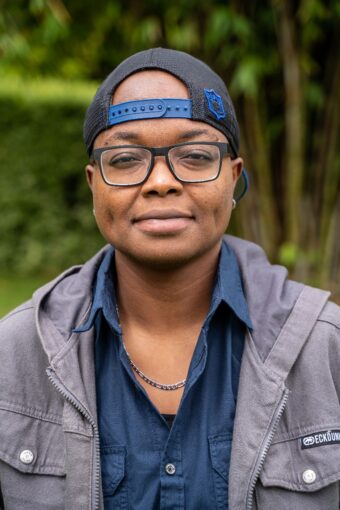 Chandelle O’Neil.
They are a Sustainable Energy Engineer and Human Rights Advocate in Trinidad and Tobago. They have their Bachelor of Engineering (with distinction) in Mechanical Engineering from the University of Guelph and worked in process engineering for waste reduction and improving efficiencies. They have worked in human rights advocacy for over 10 years (since they came out) and currently volunteer with CAISO Sex and Gender Justice working on LGBTQ+ community engagement and outreach. They completed their Post-Grad Diploma in Global Leadership, focusing on Regenerative Leadership from the UN Mandated University for Peace. They are also social entrepreneurs with their enterprise, Mawu Energy Services, which supports energy efficiency, sustainable design, and resource management in residential and commercial buildings and properties. Additionally, they are the Caribbean Regional Member with the Youth Climate justice Fund
Powiązane artykuły



Jeśli nie zaznaczono inaczej, materiał nie może być powielany bez zgody redakcji.