
We Ran With Nothing but Our Names
The Role of Climate Change in Migration and Conflicts
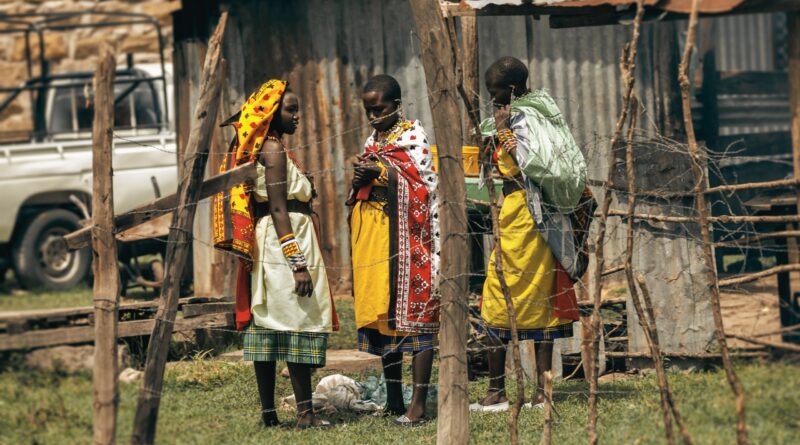
Nasieku awoke promptly at rising of the sun. There was a dry wind blowing over the plains of Baragoi and the air was still. Her little one, scarcely four years old, was sleeping beside her. Then, the non-concerted sound of fire arms. Crack, crack, the noise was that of wood, breaking. Her heart stopped for a moment. In a few seconds flames were up behind her hut. There were shouts, gallop, and noise. The family had no economic resource but cattle and this drove the cattle out of the compound in panic. It was the third time in six months that bandits were back. Nasieku did not say anything. She grabbed her youngest, woke her elder children and ran away. Trembling in her bare feet she raced along thorny plants, her frightened children following quickly in her wake. They turned not back.
These raids had changed the settlement pattern of the Samburu and Kalenjin pastoralist communities who have shared their reliable water sources and pastures in the past. Those resources, however, became contested with the advent of climate change and years of drought. Cattle stealing and raiding, fights, all that followed, new modalities of migration across East Africa in this case not over ocean and geographic boundaries, but over the dried up riverbeds of those seasonally dry rivers with their rifle, grief, and a feeling of loss.
A Region on the Brink
In Kenya, Arid and Semi-Arid Lands (ASALs) cover approximately 80 % of the national territory, and these ecosystems are estimated to accommodate 36 % of the population, as well as over 70 % of the livestock in the country. In addition to being ecologically important, these vast landscapes have turned into the hub of a growing climate emergency. The rate of increase in temperatures in ASAL counties is significantly higher compared to the national average. There has been an increase of around 0.06 o C and 0.07 o C annually in Turkana and Garissa respectively, which is over a number of decades. At the same time, rain patterns have become more erratic; 75 % of rainy seasons in 2016-2021 experienced less rainfall than normal.
Drought cycle that used to come once in every 10-12 years now comes in every 2-3 years . The latest drought that occurred between 2020 and 2023 was the longest drought in Kenya in more than 40 years and caused extensive damage in the Horn of Africa. To give an example, in 2022, over 2.6 million livestock in ASAL counties died of starvation and dehydration. Families like those of Nasieku not only lost their herds but also their social status, inheritance and income. The size of herds was curtailed by as much as 50 % in some districts.
Lack of pasture and water has caused migrations earlier and farther. Historically cooperative and negotiated traditional seasonal patterns are falling apart under the pressure. Controlled migration used to be the source of peace, but the new displacements are likely to cause territorial conflicts and violent confrontations.
The cycle of drought-migration-conflict-and displacement is set to worsen unless something is done right now. Climate change has brought the natural stressors in the form of war-catalysts. ASAL region is yet at a point of both environmental and social and political fragmentation.
The Collapse of Tradition
The decline in custom among the Samburu and Kalenjin pastoralist communities of Kenya highlights a radical social and environmental change. Traditionally, the movements over the arid and semi-arid terrain were controlled by complex oral rules: seasonal movements that were timed with the rainfall patterns, the well-organized rotational grazing schedules, and agreements between communities that allowed them to share pasture and water in times of shortage. These unwritten agreements kept a healthy balance between socioeconomic needs of humans and the vulnerable ecosystems. In the modern reality, however, climate change has caused an existential crisis and destabilized those very foundations.
The Horn of Africa suffered the worst drought in over 40 years between 2020 and the beginning of 2023. In Kenya, the ASALs, such as the Samburu and Kalenjin territories, suffered a loss of about 2.5 million heads of livestock, regional losses of more than 9.5 million animals, and a projected economic loss of USD 1.5 billion. This kind of destruction is not limited to economic indicators but it is a cultural disaster. In the absence of adequate livestock, pastoral wealth is lost, so is the motivation and ability of societies to continue to move along traditional migration patterns.
Herders are driven to expand their foraging in conflict areas. A recent study in northern Kenya confirms that the diminishing forage and water resources have reorganized the traditional transhumance patterns, forcing communities into conflicts over access to the rangelands.
These tensions are also compounded by other forces such as population increase, land privatization and political marginalization. Close to 80 % of the Kenyan territory is ASAL, with over two billion pastoralists distributed around the world and the pastoral economy in Kenya generates over USD 860 million per annum, 75 % of which is generated by livestock production. However, the reforms of the legislature have undermined community land ownership and undercut traditional indigenous governance systems making the traditional path legally insecure. As a result, the Samburu and the Kalenjin, who are not part of land-use planning, have seen ancient agreements fall apart and thus the conflicts that have been solely caused by institutional oversight.
Migration out of pastoralism is also triggered by environmental and social pressures. An ex-pastoralists survey in 2024 in the northern part of Kenya showed that the former livestock herders who left the industry had lower subjective well-being, informal dwellings, and secure work. Even though there are families that resettle in cities, the majority of them are now poor and socially displaced.
To conclude, climate change has eroded the ecological environment that is critical to migration, undermined the legal and social systems governing it, and increased violent conflicts as herders fight over diminishing resources. Traditional oral culture is getting destroyed by drought, privatization and marginalization, and communities find themselves in a defensive aggression and socio-economic downfall loop. Without a timely re-introduction of communal land tenure, support of inter-group agreements, and creation of climate resilience, pastoralists like the Samburu and Kalenjin will not only face the loss of their livelihoods, but also of their cultural heritage.
A War over Survival
What started as inter-ethnic conflicts over livestock have grown into a multi-dimensional conflict with climate stress, the imperative of survival and political arena. The Samburu-Kalenjin conflicts, which initially took the form of small scale cattle rustling, have now developed to be a full-fledged armed conflict involving automatic firearms, reprisals, and punitive actions.
Interethnic tension about cattle in Samburu Kalenjin regions has increased, but is no longer episodic raiding, but rather market-organized stealing. On 10 March 2025, a raid in Kilepoi Kawap (Baragoi) resulted in no fewer than six deaths and the seizure of around 800 heads of livestock; around 150 cattle were later returned by the security agencies. War areas tend to flare unexpectedly at any time, putting people in danger. In March 2025,villages like Nasieku were deprived of homes in arson in a few hours; whole communities moved out. There has been a mass exodus of schools in Baragoi, as six primary schools have been permanently shut down out of the fear of more attacks. Children who lived under such conditions often study academic content in an atmosphere of constant gunshots, and trauma becomes an inseparable part of their childhood.
The interrelationship that exists between ecological degradation and violent conflict is no longer debatable. Severe drought and poor rangelands push pastoralists into disputed areas where pasture and water availability becomes more and more contentious. These climatic pressures have been worsened by political marginalization and have also led to a long-term security crisis in northern Kenya. The depletion of grasslands has also re-organized raiding as a market-based activity as opposed to subsistence-based one since stolen animals are always sold to buy weapons.
Inter-communal hostilities are increased by political manipulation. Politicians have also been accused of identifying with certain ethnic groups hence aggravating the communal conflicts. The Samburu-Kalenjin conflict has now been intertwined with partisan politics; the raids are no longer a case of rustling only but ethno-politically fueled shoot-on-sight operations. At the same time, the security has continued to respond slowly to violent attacks on Samburu-Kalenjin lands, which have not deterred the violence. Police, military, and reserve forces are also faulted as inefficient.
If climate resilience, land tenure reform, disarmament, and inclusive governance are not among the priorities, the conflict is expected to escalate. Remediation must be based on restoring community-based mediation processes, specific investment in restoring the ecology, and political responsibility. Such measures are the only ones which can counter the immediate violence and its underlying causes.
The Growing Border of War
The huge, parched terrain of Northern Kenya is becoming a battleground not just between cattle thieves or tribal hatred but also larger rivalries driven by climate change, political struggle and limited resources. The violence goes beyond the types of Samburu-Kalenjin tensions. Between Marsabit and Garissa, people struggle against a star system of forces that make even survival a life and death affair.
In the northern parts of Kenya, the pattern of conflicts is strangely coordinated:
In Marsabit, there has been an increase in the Borana-Gabra clashes with over 200 people killed and 4,000 heads of cattle stolen in Saku Constituency between 2022 and 2025. In January 2025 there was a raid capturing 100 cattle and one person died.
The fallout of ongoing violence in the northern frontier of Kenya is well beyond loss of life and cattle rustling. Bigger consequences are a dysfunctional society, ghost towns, closed schools and clinics, and the mostly silenced struggle of uprooted families. In Marsabit, for example, over 9,000 people have been displaced since 2005 as rising conflicts played out. In other areas, like in Turbi and Moyale, the fear of incursion has led to closure of whole education systems.
Access to healthcare is also impaired. Mobile clinics stopped operating in remote pastoral areas, and the displaced populations struggle with malnutrition, lack of medical care of the injuries, and mental trauma. The 2024 surveys showed that internally displaced persons, particularly children, had severe mental-health challenges.
Customary conflict-settlement processes such as councils of elders or clan mediators are overstretched. Their authority has been worn down by the spread of modern firearms and politically-motivated interventions. This is especially the case among women. Women like Nasieku, who used to be the custodians of households and the community, are chased away with children leaving behind homes, social functions, land rights and livestock. Research carried out in 2025 in IDP settlements in Wajir and Marsabit found that 70 percent of women who were displaced are experiencing acute food insecurity, limited healthcare, and landless, with no access to credit. As a result, they are being rehabilitated under hard circumstances; most of the time in camps, on borrowed land or even under trees. They are the representatives of resilience to the crisis which is not quite visible to the rest of the country.
A Way Forward
In the future, an overall response is needed. The conflict in Northern Kenya is not a security issue.
Development programs should put an emphasis on climate-resilient infrastructure-boreholes, water pans and community-led pasture restoration, strengthen local peace committees and formally guarantee women and youth involvement in decision-making.
Disarmament activities must be humane, they should be coordinated with each other and there should be increased legal access to grazing routes.
The local governance structures and traditional councils must be reaffirmed by positive interactions and encouragement.
The counter-radicalization should be based on quality education and alternative livelihoods.
Due to these interdependent problems, it is no longer acceptable to have a disjointed, piece-by-piece approach. This is a national emergency, whereby strategic and multi-faceted interventions are in order.
What Can Be Done?
Instability in northern Kenya is a multidimensional social and environmental problem and there is no one-dimensional solution in sight. However, the region has a reason to be optimistic in case the interconnection between climatic stressors and violent conflict is not ignored but treated as a whole.
Climate adaptation should be made a national priority. Resource-based conflict can be significantly mitigated by the construction of sufficient water storage structures, the drilling of boreholes and the establishment of mobile grazing tracks.
Another priority is the involvement of local peacebuilders (especially women and youth). Programs implemented by Interpeace and the Northern Rangelands Trust show that with the right resources, community mediators can help to avoid the recurrent violence, as well as promote the inclusion of gender-sensitive clauses in post-conflict agreements which leads to better resilience in society.
At the same time, national policy needs to be in line with centuries-old pastoralist adaptive mechanisms, not limiting them. The current law systems tend to consider mobility as a liability instead of a need. Indeed, migration is part and parcel of pastoral responses to environmental variability and policies which penalize or give special status to sedentary agriculture are likely to exacerbate current vulnerability.
Unless timely and concerted efforts are made, violence is set to escalate. Climatic conditions and armed conflict are working hand in hand and any remedial measures should appreciate this interdependency. Combining environmental adaptation, conflict mitigation and cultural responsiveness, the region will be able to establish the foundation of a cascade of interventions that will turn around deep-rooted patterns of violence.
A Final Word from Baragoi
Baragoi can be found at the border of memory and war. To Nasieku, it used to be cattle songs, laughter of children and wind that danced over the grasses. To this day it is but a word that has a savor of ash. She came with her children only and a weakened memory of peace when she arrived in a displacement camp. „I do not know whether we shall ever reach home”, she said, looking in the direction of the distant horizon, „I do not know whether there is home anymore”.
Her voice is stable, but fragile with doubt, and it is the voice of thousands of people in the area who have been giving birth to children in settlements, herders back to burned-out kraals, children who now play games that resemble the sound of gunshots.
These are voices which are far in Nairobi boardrooms, whose dialect they do not understand. But they bring with them the knowledge of endurance, the sorrow of defeat and the unwavering faith of reconstruction. By ignoring them, we will be giving up the future of northern Kenya; by hearing we will be starting a new beginning.
 Ayien Tevivona is a Kenyan policy and diplomacy professional dedicated to advancing good
governance and environmental sustainability. Her work blends experience in public diplomacy,
international relations, and project management, reflecting a deep commitment to shaping
policies that promote inclusive development and global cooperation.
Currently serving with the U.S. Embassy’s Public Diplomacy Section, Ayien supports initiatives
that strengthen civic engagement, strategic communication, and partnerships between Kenya
and the United States. Her efforts have contributed to programs that elevate youth voices, foster
people-to-people ties, and promote mutual understanding through cultural and educational
diplomacy. As a Study of the U.S. Institutes (SUSI) alumna, she has been at the forefront of
youth leadership and policy advocacy both locally and internationally. She was a delegate at the
United Nations Environment Assembly (UNEA-6), where she engaged in discussions on
environmental governance, climate adaptation and the role of young people in advancing
climate action. Her commitment to sustainability extends beyond policy dialogue; she has
supported projects such as Open Dialogues on Climate Change (ODCC) that promote
environmental awareness and integrate climate resilience into community development.
Ayien previously served as a Research Officer at the Policy Action Initiative, where she
contributed to research on public policy and Kenya’s electoral processes. She further served as
a Country Representative for the Pan African Female Youth Leaders and participated in
continental programs focused on democratic governance. Guided by a vision to contribute to
Kenya’s diplomatic service, Ayien aspires to specialize in public and environmental diplomacy
hoping to shape sustainable policies that advance human rights, gender inclusion, and global
resilience.

Powiązane artykuły




Jeśli nie zaznaczono inaczej, materiał nie może być powielany bez zgody redakcji.