
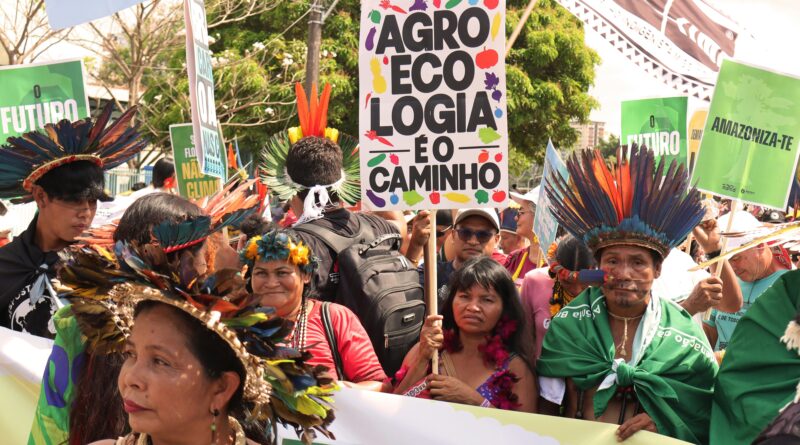
Voices of Hope: How Latin America’s Youth Are Shaping Climate Justice
A shift toward sustainability is no longer optional, it is an urgent necessity. Yet, we must ask: do we want a new greener economic system that replicates the same current inequalities? Or do we dare to imagine and build a new system rooted in fairness, equity, and justi
Climate justice is a generous and strong principle claimed by the civil society movements globally, that seems to encompass all other equity related principles including the „leave no one behind” from the United Nations 2030 Agenda and „just transition” from the Paris Agreement. This concept not only stresses the need for more ambitious mitigation efforts globally for the sake of the future generations, but also emphasizes the inequalities exacerbated by climate change. From fair burden sharing to income, to safety and opportunity, we must not forget Latin American stories of ongoing injustices: Activists are threatened or killed. Youth from the periphery are left behind from the new economy transition. Informal housing collapses under heavy rains. And they are not isolated cases, but interconnected cross-borders failures.
This article asks: What does climate justice look like on the ground? Drawing from real voices in Mexico, Brazil and a researcher in London, we explore how young people are reframing justice as solidarity and shared responsibility, not charity.
Climate Justice is Development Justice
„In the Global South, climate and development cannot be separated”
Youba Sokona, Mali expert and formal vice-chair of the IPCC
For youth in Latin America, climate justice means securing the right to sustainable development. Jefferson Rodrigues (28y) is a blind activist from Brazil and leads Ozipa Criativa, an initiative that promotes education, culture and territorial development through creative economy in Parque Oziel Complex, one of Latin America’s largest informal settlements. He expresses that:
“When youth from the periphery spend hours commuting in a precarious transport system, overloaded under extreme heat to jobs, or when storms destroy our already precarious homes with no safety net, that’s climate injustice”
Climate change effects exacerbate the already existing inequalities affecting even more those in vulnerability. And these disruptions without insurance, compensation or public support not only cause losses, but reverse their development time and worsen social inequality. Besides those external challenges, Jefferson also explains that there are in-depth internal ones for those young people. Often bombarded by the pressure to enter the conventional market to bring home income, they are discouraged from new economies and green opportunities. Soft skills such as self-confidence and ownership to stand as change maker and beneficiary for new models are extremely needed, although the green education, skilling and training system is often still lacking.
The UN Economic Commission for Latin America and Caribbean stresses that economic opportunities remain limited for young people in the region, with high rates of unemployment and informal labor, as well as poor working conditions and restricted access to social protection systems, perpetuating cycles of disadvantage. In this context, Ayuda en Acción (2025) warns of recent cuts in international cooperation and funds for Latin American development from donors like USAID, France, Germany and the UK that further risk leaving youth behind.
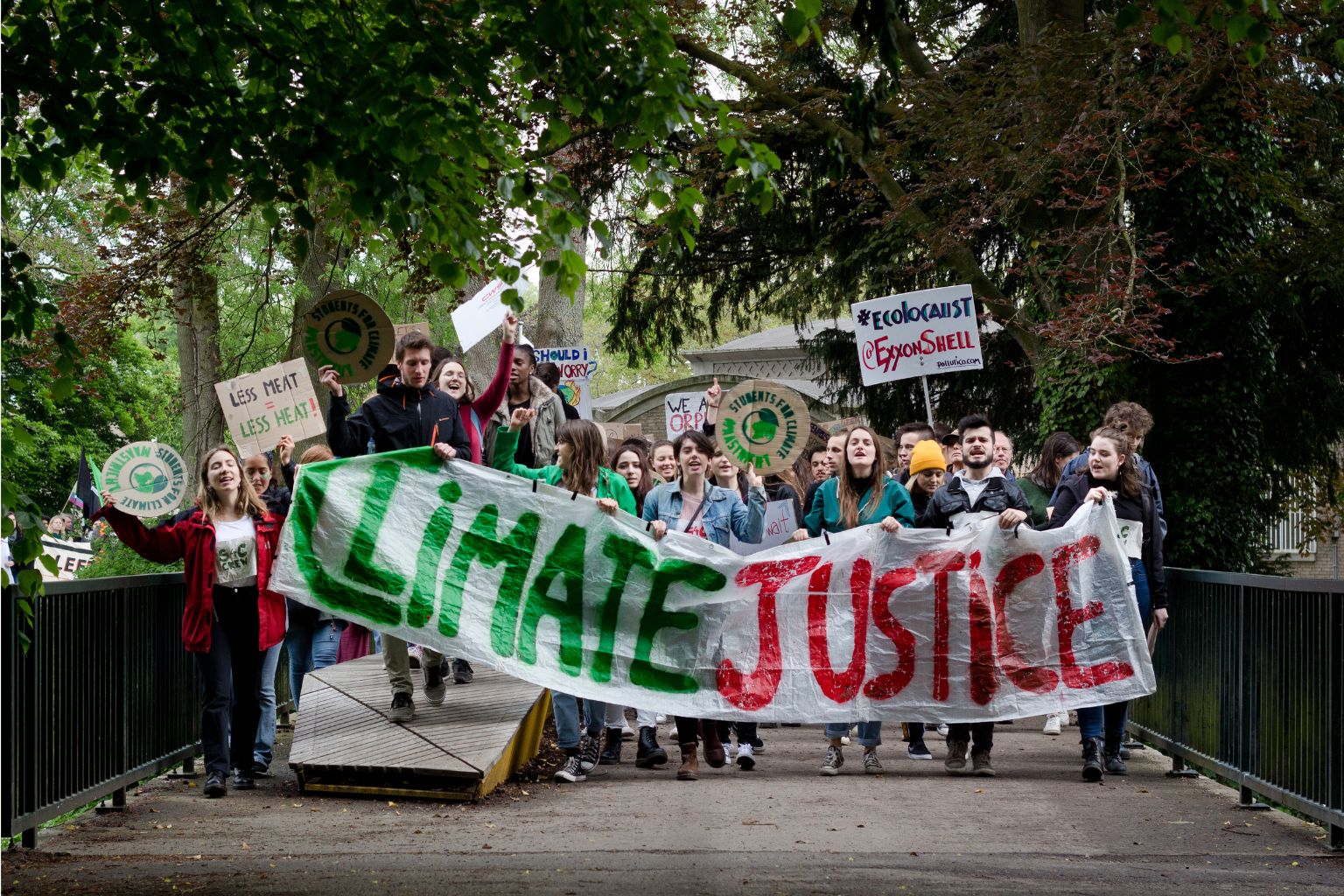
Climate Justice is Human Rights
In Mexico, one of the most dangerous countries for environmental defenders and journalists – over fifty murdered in 2021 according to the Global Witness – youth advocate peacebuilder David Mayoral (27y) leads AdaLead, using technology, such as panic-button device that works even in areas without cell service, and community platforms to protect at-risk activities.
„Climate justice means tackling deep social inequalities, as well as defending those who protect our ecosystems,” says David.
Indigenous people constitute less than 5% of the world’s population, yet protect 80% of global biodiversity. However, they are treated as troublemakers and even criminals by protesting against destructive mining or logging. David argues that nationally, laws and international commitments such as the Escazú Agreement must be enforced. He also calls for funding community-led reforestation or solar energy cooperatives in impoverished areas, not just mega-projects. Finally, he emphasizes the legacy of extraction in Latin America that long fueled the North’s growth, which implies responsibility of Europe and the U.S. to now support Latin America’s just and sustainable future and not hinder it.
Cross-border Climate Justice
“What is needed is a rethink of the climate justice question beyond national confines, and accounting for how one’s action creates knock-on effects in upstream value chains, borne by another community”
Jodi-Ann Wang (27y) leads climate justice research and as a policy fellow at the LSE, she explains that there is a narrowness as to how European countries and corporations currently conceptualise their responsibilities in the context of just transition in relation to other global communities perpetuating the global inequality. This calls for a rebalance of the current dynamic and taking a broader concept of justice.
She calls attention to the examples of violation of Indigenous communities’ sovereignty and rights to say no in extractive activities, such as the Gran Chaco in Argentina deforestation case in Argentina, financed by Santander Bank, highlighting the failures of stakeholder consultation and disregard for the ILO Convention 169. Another recent key legal case is the Lliuya v. RWA AG case, where Peruvian farmers sued the German energy giant RWE for glacial melt and the court in 2025 ruled that transboundary climate liability is valid under German civil law – a breakthrough in cross-border corporate accountability.
A reminder, only 100 companies are responsible for 71% of global emissions since 1988. Justice must account for these disproportionate impacts and responsibilities.
Message for Responsibility and Solidarity
Climate justice needs to be considered globally, recognizing the common responsibility to tackle climate change but differentiated share across countries and actors. Whereas, it must be driven, as Jefferson and David agree, not in the spirit of solidarity nor charity of the North „helping” the South, but collaborating as partners to address climate change that knows no borders.
Responsibility for Europe and the US to take ambitious action at home by drastically cutting emissions and transitioning to clean energy, while addressing their own footprint in Latin America.
Solidarity to mobilization of finance for adaptation and conservation, while learning from Latin America’s rich traditional knowledge and environmental defenders.
Justice to hold polluters and human right violators accountable, while supporting grassroots efforts for the right for sustainable development.
„Climate justice is a shared human struggle. Whether in Europe or the Americas, we all depend on the same stable climate and web of life” – David Mayoral.
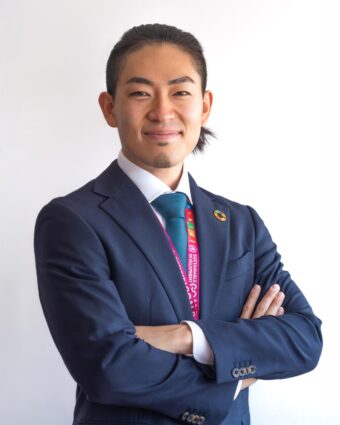 Yusuke Sakai
Graduated in Law from the University of Porto, Yusuke served as Co-Lead of the Just Transition Working Group of YOUNGO (the UNFCCC Youth Constituency) and co-founded Juventudes para o Desenvolvimento Sustentável (JDS). With a strong focus on sustainability, his passion lies in creating pathways that foster trust, collaboration, and synergy among diverse actors to accelerate a just transition.
References
Ayuda en Acción. (2025). The crisis in international cooperation funding puts the future of Latin American youth at risk. Available in https://ayudaenaccion.org/en/news/crisis-financiacion-cooperacion-juventud/
ECLAC. (s.d.). About Youth. Comisión Económica para América Latina y el Caribe. Available in https://www.cepal.org/en/topics/youth/about-youth
Rojas, S. (2025, 15 de maio). ‘We Are Witnessing Ecocide’: Santander Accused of Funding Vast Deforestation. The Guardian. Available in https://www.theguardian.com/global-development/2025/may/15/we-are-witnessing‑ecocide‑santander‑accused‑of‑funding‑vast‑deforestation
Global Witness. (2022). Decade of Defiance. https://www.globalwitness.org/en/campaigns/land-and-environmental-defenders/decade-of-defiance/
National Geographic. (2018). Can Indigenous Land Stewardship Protect Biodiversity? https://www.nationalgeographic.com/environment/article/can-indigenous-land-stewardship-protect-biodiversity-
Taylor, M. (2017, July 10). Just 100 companies responsible for 71% of global emissions, study says. The Guardian. https://www.theguardian.com/sustainable-business/2017/jul/10/100-fossil-fuel-companies-investors-responsible-71-global-emissions-cdp-study-climate-change
UN DESA. (2024). Bridging Science, Policy, and Society — Tackling Climate and SDGs in Synergy [Vídeo]. YouTube. Available in https://www.youtube.com/watch?v=K8pW4Z_oNuc&t=1291s&ab_channel=UNDESA
Powiązane artykuły
 Young, Bold, and Under-Supported: Why Youth Climate Movements in the Global South Deserve More Than Just Applause
 Indigenous Peoples’ Leadership in Climate Justice: Building A New Climate Action Paradigm
 Zuzanna Borowska: Behind the Scenes of Climate Diplomacy
 Story from a small island community.
 Safe for Whom? A Safer Space for a Gender-Responsive Just Transition
Jeśli nie zaznaczono inaczej, materiał nie może być powielany bez zgody redakcji.