
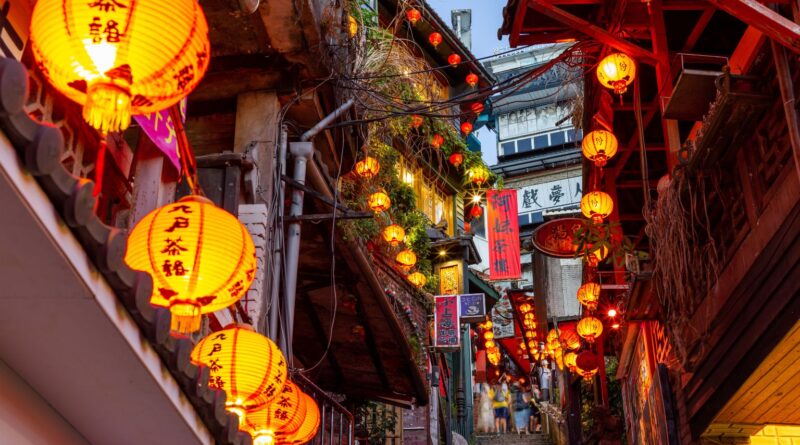
Story from a small island community.
Climate justice from a female climate scientist’s perspective and how she fights for it.
Interview with Angela Chia-Chun Liang conducted by Zuzanna Borowska.
Climate justice is all about people and their stories, so let’s begin with hearing your personal story. How did the environment and climate become important to you?
Growing up in a coastal village in southern Taiwan, I have lovely memories of the ocean. The sky is always blue, and connects and meets with the ocean at the horizon. The ocean ties closely to the community’s economy, cultures, traditions, and religions. I remember walking barefoot on the sand, finding various beautiful seashells, and watching tiny fish swim in the shallow water. I even remember one time finding a tiny, fingernail-size, half-transparent baby octopus in a ball of seaweed that had just washed ashore. Near our community, the location also hosts the largest harbor in Taiwan.
Throughout the years, I have witnessed the changes in the local landscape and maritime commerce. As technology and the economy developed, the fish stock once increased but then started to decrease due to overfishing. The sea level rises and covers different parts of the beach that I used to run around on. And I never found another baby octopus washed ashore.
In the past, we used to wear multiple layers during our annual Chinese New Year celebrations in winter. Now, the winters are so warm that we wear short-sleeved shirts during the Chinese New Year celebrations. At the same time, heavy industry and factories nearby slowly influenced the locals’ health through the foul smells of gases expelled from their chimneys. Growing up and witnessing so much change in my community, it prompted me to do something about it.
How did your early experiences of growing up in a coastal community inspire you to become a climate scientist?
My personal story made me realize that I needed to take some action to stop the rise of suffering that comes with the climate crisis. I saw first-hand how the locals struggled with environmental changes, including me and my family. Many factors play into these struggles of the locals, such as their socioeconomic status, their knowledge and education, and their awareness of the issues. These factors are interconnected as well. Most of the time, I see that the locals with low socioeconomic status, including my family, can’t afford their children’s education. And without good education, their children would suffer the same fate as their older family members – not knowing much, including what’s happening in their environment and how these changes are influencing their lives and health. Low social status turnover rate contributes to a less funding situation for the local authority and schools. And the whole cycle starts again.
My life experience led me to become a scientist. Determined to find a solution to help my community, I became the first person in my family to go to college and study Physics for my Bachelor’s and Master’s degrees because I wanted to understand how the universe works. And I continued to push myself further to see and learn things with my own eyes. As I continued to learn and evolve, I slowly narrowed down my direction a little bit. For example, one day, I witnessed a situation that pushed me to focus more on climate science and how I can help my community on different levels. It was a clear, beautiful day when my airplane took flight at an airport in Tokyo, Japan. While flying over the ocean and getting closer to my hometown, I thought I saw a beautiful ocean surface reflection. However, once the airplane lowered its altitude, I suddenly realized that the beautiful ocean reflection was actually an ocean full of plastic trash floating on the surface.
Was it then that you decided to do something about it?
Together with some other concerning environmental issues that I learned around the same time, such as how plastic straws choke sea turtles to death, and the melting of glaciers and ice sheets, having the personality of a learner made me decide to dive deeper into the knowledge of environmental and climate science. I joined a Taiwanese climate advocacy group and started helping the group to educate local high school and college students on climate issues through summer camps, and contributed to the group’s climate advocacy at the Conference of the Parties (COPs) at the United Nations Framework Convention on Climate Change (UNFCCC). I also started to educate people around me on climate issues, not only because I wanted to help people understand the challenges that our environment is facing, but also to make my community aware that there are deeper, built-in social injustices in these climate issues.
In 2018, I began an Earth Science PhD at a school in southern California. This brought my scientific learning to another level.
What is your research about and how does your story contribute to it?
During my PhD, I studied ice sheets and glaciers and the change of sea level over time with prestigious colleagues and scientists. During my PhD, I was able to contribute to our collective understanding of what’s changing the polar regions with higher accuracy. My research result has helped inform the general public and decision-makers that, although the glaciers and ice sheets are melting in polar regions, they contribute to the rise of global sea level, which influences everyone. Our research group also confirmed that the global sea level is rising uniformly. As a person growing up in a village close to the ocean, my research and my PhD knowledge helped me understand the source of the sea level rise, how much the sea level is rising and predictions of how it will rise in the future. It also brought into light some potential steps that vulnerable communities worldwide could take to adapt and avoid further economic loss, and the connection of global sea level rise to the bigger picture of climate change through changing the global water cycle.
How do you manage to combine your scientific interests with civic engagement?
Thanks to those academic understandings and contributions, I was then also able to make real-life impacts with my technical understanding and skills. One particular example was working as an advisor for a developing country on Just Transition at the UNFCCC COP28 conference in Dubai. We were able to contribute to the establishment of the first international agreement on Just Transition under the Paris Agreement with certain evidence-based language. On another occasion, as a science and technology advisor to an international non-profit, I used my climate expertise and advocacy experience to help carry out projects with our non-profit’s national teams across 4 continents. It is amazing to see how work on climate action and climate justice happens in waves, influencing youth and minority voices in multiple countries.
So what does climate justice mean to you and what are you doing to achieve it?
Thanks to my unique mixture of personal lived experiences and extensive academic research, I have come to an understanding that climate justice comes in many aspects, and making scientific findings and knowledge available to everyone is one way to contribute to it. That is what I try to do everyday.
Throughout my journey, I learned the word “justice” deeply not through a school degree, but through numerous, valuable life experiences – and I’m still learning it! I learned that there are many types of injustices, and then realized that I grew up in an environment with multiple types of injustices – yes, I am in a part of the system that is unjust and I didn’t even realize that the world is unjust to me until I grew up and got educated enough.
But I am empowered by facts, data, science, and education. Facts, data, science, and education are tools that should be accessible to everyone, as they give the power back to a person. They are also a part of a universal language that connects people from different places in the world. They can be used to build trust, find common ground, and form a network of people willing to make changes and contribute to better climate justice. These tools give people voices. Without these tools, I would still be powerless. I now want to dedicate my whole life to bringing these tools to places around the world for anyone, because every corner in the world deserves climate justice. Using these tools, we could also prove that including diverse voices in dialogues and decision-making processes creates better results.
And how can we successfully create a space for inclusive dialogue on climate change issues that leaves no one behind?
This is a great question that shouldn’t have only one right answer. There are many ways and forms to do it, including publishing this article to let the story be heard by more people worldwide. Sharing stories, making voices heard, and making fact-based information accessible to more people is the key. In an ideal world, when everyone has the same amount and understanding of what’s happening, is when we can make everyone aware of the situation, take action, and leave no one behind. It is not an easy path, and it is going to take time, as I am still living it and I still have a long way to go to see the ideal world happen. But it is happening and I urge everyone to take action.
Finally, what can the global community, especially decision-makers and leaders, learn from coastal communities like the one you come from?
I come from a vulnerable coastal community in the Global South and a community of world scientists. As a person from a vulnerable coastal community, my life story showcases that climate change is very real and our environment is changing within the same generation. Through collecting and showcasing stories from coastal communities, these witnesses present a compelling global story of climate change and urgency.
As a person from the global scientific community, my research has contributed to our collective understanding of global sea level, polar ice melt, and their relations to climate change. Findings from the global scientific community that I belong to also present a stronger case proving that climate change is real and happening, and meanwhile they also quantify the amount of climate change through different physical changes (such as changes in global temperature, the amount of ice sheet melt, the level of sea level rise, etc). Lastly, my presence in the scientific community as a woman of color and first-generation college student showcases another perspective of climate justice. Higher education does not come easy for females around the world according to our human history. There are many scientific fields lacking enough female representatives and thus their perspectives on how the education and research systems or structure should be designed in ways that are inclusive to everyone.
The stories and impacts of being from a vulnerable coastal community in the Global South and a community of world scientists can both inform decision-makers. During the policy-making process, they are interested in constituents’ stories, facts, and many other factors to help them make a decision. While I understand that there are many other factors in play during the process and every decision-maker weighs their priorities differently, seeing the establishment of evidence-based, data-driven policies is every scientist’s dream – mine as well.
 Dr. Angela Chia-Chun Liang is a physicist and environmental scientist specialized in data analysis, remote sensing, and global glaciers. Besides her STEM background, she has 9 years of experience in science policy, advocacy, and diplomacy. Currently, Angela is a Knauss Marine Policy Fellow scholar at the US federal agency National Oceanic and Atmospheric Administration headquarters.
Powiązane artykuły

Jeśli nie zaznaczono inaczej, materiał nie może być powielany bez zgody redakcji.