
Confronting Energy Poverty: The Path to Transformation of a Global Challenge
I’ve always believed that to truly understand a global challenge like energy poverty, you first need to bring it down to a human scale. As a 30-year-old Burundian woman, my passion for environmental protection isn’t an abstract concept; it stems from my childhood, inspired by figures like Ambassador Mbonerane, with whom I’ve had the honor to connect. It’s this personal connection, this drive to act, that has shaped my journey.
Energy Poverty: A Global Crisis with Local Faces
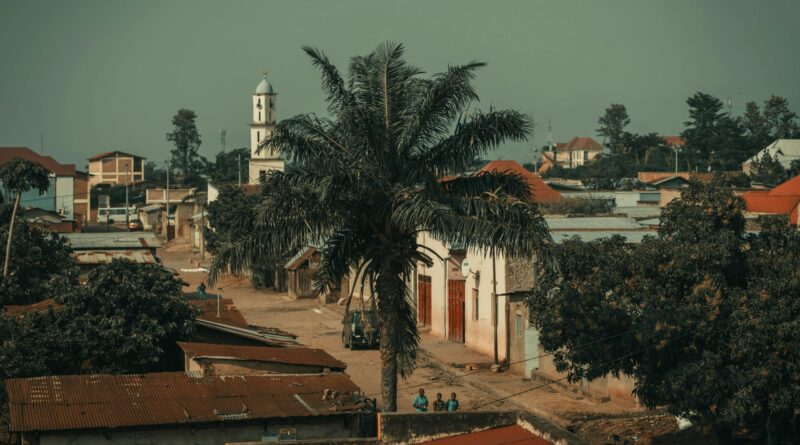
Energy poverty affects nearly 1.3 billion people globally, limiting access to reliable energy services, which compromises health, education, and economic development. Here in Burundi, we experience this daily. Households suffering from energy poverty often rely on unsustainable energy sources like firewood and coal, exacerbating deforestation and air pollution. This is a tangible reality I see around me, in villages where women spend hours gathering wood, or in homes where smoke from cooking fires impacts children’s health. According to a report from the UN Development Programme, about 2.8 billion people rely on solid fuels for cooking, which leads to significant indoor air pollution. These figures are alarming, but behind each number, there’s a family, a life impacted.
The repercussions of energy poverty extend beyond individual households. Studies, like one by the World Bank, highlight that households without reliable energy are less likely to engage in productive economic activities. This creates a cycle of disadvantage that perpetuates poverty, making it difficult for families to improve their living conditions. And education suffers, too. I remember children struggling to study after sunset. Access to electricity, as highlighted by the Global Energy Monitor, can significantly improve educational outcomes, as children can study in well-lit environments. It’s a light, both literal and figurative, for the future of our youth.
Energy Transformation: A Must
Energy transformation is essential to tackle these challenges , aiming to replace fossil fuel sources with renewable energies such as solar, wind, and hydropower. My commitment to this field was strengthened during my academic internship, where I produced a video focused on environmental protection—a project into which I poured my heart. Later, joining an association fighting climate change, I gained invaluable experience in managing climate solutions. It’s this experience that led me to found UMUSHINGE.
UMUSHINGE was born from my desire to reverse unsustainable practices and promote collective environmental responsibility in Burundi. We aim to develop innovative and sustainable solutions for adapting to climate change. We have two components: entrepreneurship, focused on producing ecological bricks and ecological charcoal stoves, and a community component, centered on advocacy and supporting communities towards sustainable initiatives. For example, we recently launched a project to support women in energy efficiency, recognizing the crucial role they play in household energy management.
As a promoter, one of the major challenges has been reconciling my community-based approach with building an effective operational team. But I observe with pride that it works. Another challenge, which I don’t see as an obstacle, is the fact that I’ve never received direct institutional support. I’ve had to develop my ideas and seek various forms of support, and this has made me stronger and more reliable.
The Case of Burundi: Untapped Potential, Unwavering Determination
In Burundi, the energy situation is particularly concerning. According to World Bank data, nearly 90% of the population lacks access to electricity. Most households rely on traditional fuels, which worsens energy poverty and health issues. This is a paradox, as our country has considerable potential for hydropower and solar energy, yet this potential remains largely untapped. Projects like the Jiji-Mulembwe hydroelectric project, expected to produce around 6.5 MW, represent a step in the right direction. This project is being carried out on behalf of the Burundi Water and Electricity Production and Distribution Authority, which is part of the Ministry of Hydraulic, Energy, and Mines. It includes the construction of two run-of-the-river hydroelectric plants in the commune of Songa, Bururi province, and in the commune of Buyengero, Rumonge province, in southern Burundi. The contractors include CMC (Italy), ORASCOM (Egypt), KEC International (India) for the transmission lines, and VINCI (France) for the associated stations. This is the kind of initiative we need to multiply.
The lack of reliable energy access in Burundi has a profound socio-economic impact. A study by the African Development Bank found that improving energy access could increase GDP by up to 2% annually. But beyond the numbers, this means more opportunities for our youth, more time for women who, according to UN Women, often bear the burden of collecting firewood. Providing them with access to clean and affordable energy means empowering them to engage in economic activities and education.
Ecological Costs: Finding a Balance
While the transition to renewable sources is essential, it also has ecological costs. The manufacturing of solar panels, wind turbines, and other green technologies requires natural resources and generates waste. For instance, the production of solar panels relies on materials like silicon, which needs intensive mining and can have significant environmental impacts. A study by IRENA emphasizes that the transition must be accompanied by sustainable practices to minimize these costs. It’s about finding a balance, an integrated approach that includes natural resource management and biodiversity protection.
A Sustainable Future for Burundi and Beyond
Personally, as a woman leading initiatives, I am aware of the comments sometimes made about the impact on my personal life, but above all, I am delighted to see a young girl shine, speak up, and act to impact society. We, as women, are powerful, and our role in this transformation is vital.
To achieve this, we need investments in sustainable infrastructure, training and awareness for communities, and inclusive policies that address the needs of vulnerable populations.
The fight against energy poverty and the transformation towards renewable sources are critical issues for sustainable development. In Burundi, despite the complexity, promising initiatives exist. By integrating ecological considerations into energy planning, it is possible to build a future where every citizen has access to reliable and sustainable energy while preserving natural resources for future generations. The road ahead is still long, but with concerted efforts and passion, positive change is within reach. This transformation is not just an environmental necessity; it is an economic imperative that can uplift communities and stimulate growth. By investing in renewable energy and ensuring equitable access, we can create a sustainable future for all. With the right strategies and commitment, energy poverty can be addressed effectively, leading to a more prosperous and equitable world.
 Audrey Habonimana is a dynamic eco-entrepreneur and committed leader, born on January 25, 1995, in Burundi. As the President of UMUSHINGE, an innovative organization dedicated to producing ecological solutions and community action, she stands out for her strategic approach to sustainable development. With a strong background in communication sciences, Audrey has diverse experience in program management, having held key positions in various organizations in Burundi. In these roles, she has successfully led awareness and social impact projects. Audrey’s commitment to environmental issues was recently highlighted at COP29, where, as part of the OIDF delegation, she moderated a panel on dialogue surrounding climate change. As a participant in the Young African Leaders Initiative (YALI), she has refined her leadership skills, enabling her to better serve her community and promote sustainable initiatives. Speaking English, French, and Kirundi, Audrey leverages various digital tools to maximize the impact of her initiatives.
Powiązane artykuły
 Young, Bold, and Under-Supported: Why Youth Climate Movements in the Global South Deserve More Than Just Applause
 Twarzą w twarz z ubóstwem energetycznym: Droga do globalnej transformacji
 Safe for Whom? A Safer Space for a Gender-Responsive Just Transition
 Voices of Hope: How Latin America’s Youth Are Shaping Climate Justice
 Protest przed elektrownią Sizewell
Jeśli nie zaznaczono inaczej, materiał nie może być powielany bez zgody redakcji.