
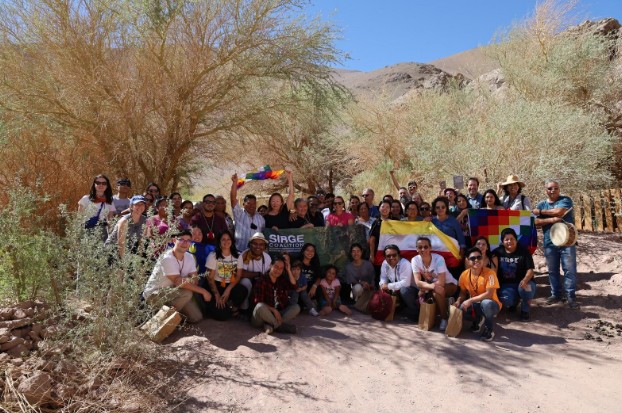
Indigenous Peoples’ Leadership in Climate Justice: Building A New Climate Action Paradigm
Who We Are, Our Values, and Relationships with the Land
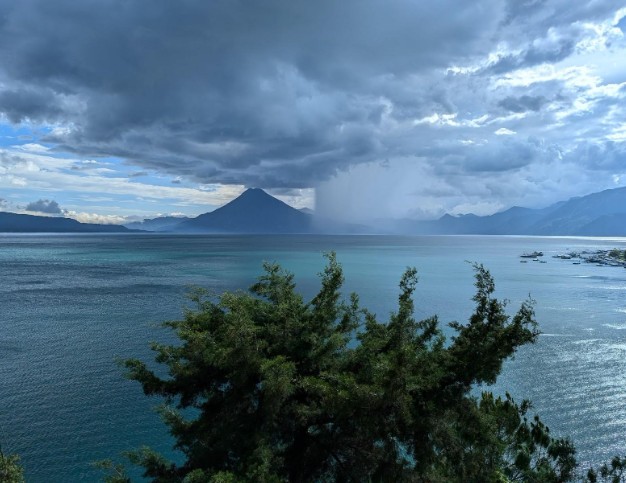
I’m Bryan Bixcul, I belong to the Maya-Tz’utujil People of Ixiim Ulew, the land of corn, now known as Guatemala. We are people of corn and people of water. My community is located on the southeastern shore of what is now called Lake Atitlán. But in our Indigenous language, Tz’utujil, she has another name: Tz’unun Ya’, which means “water of hummingbirds.”
We call Tz’unun Ya’ our grandmother, life-giver, protector, and source of inspiration. She has inspired countless songs and paintings. It’s harder to see hummingbirds these days, but when I was growing up, I saw them everywhere, around the water, dancing among the flowers. Our elders taught us that wherever we found water filled with hummingbirds and dragonflies, the water was safe to drink. Their absence today tells us everything we need to know about the state of her health.
Since time immemorial, our relationships with Tz’unun Ya’ and with Ixiim (the corn) have shaped everything about who we are: our identity, language, culture, knowledge systems, food systems, economy, and worldview. These relationships are the foundations of our society. The land has also been our greatest teacher. She has taught us to live in reciprocity, gratitude, solidarity, and balance. These are the values that guide how we relate to the land, to one another, and to future generations.
Indigenous Peoples’ Stewardship of Biodiversity and Carbon Sinks
In my native language, Tz’utujil, as in many other Indigenous languages, there is no direct translation for “ecosystem” or “biodiversity.” Instead, we use the compound noun, “Ruuwaach Uleew,” to refer to Mother Earth, to everything that exists, living and nonliving. Indigenous Peoples worldwide have been engaging in ecosystem management and biodiversity conservation since time immemorial. Although we may call it by different names and understand it through different lenses, we do this through our Traditional Ecological Knowledge.
Traditional Ecological Knowledge is experiential knowledge developed over millennia based on the intimate relationship with the web of life. It can be found in hunting and agricultural practices, land management, wildlife management, sustainable water use, agriculture-related engineering, architecture, medicinal uses of native plants, traditional fire management, management of invasive species, and so much more.
Robin Wall Kimmerer (Citizen Potawatomi Nation), author of “Braiding Sweetgrass: Indigenous Wisdom, Scientific Knowledge, and the Teachings of Plants,” beautifully articulates the source of Traditional Ecological Knowledge. She writes, „Indigenous knowledge systems are grounded in relationships, in seeing humans as family, as part of the larger circle of life, and in understanding the responsibilities that come with belonging to this family.”
To say that Indigenous Peoples have contributed significantly, through their Traditional Ecological Knowledge to the present body of knowledge possessed by scientists in the fields of ethnobotany, ethnopharmacology, medicine, agriculture and agroecology, forestry, food technology, wildlife conservation, architecture, and more, is an understatement. Many may think Traditional Knowledge is a thing of the past, something outdated, but nothing is further from the truth. Traditional Ecological Knowledge is very much present in everyday life; it is empirical, place-based, and constantly verified. Moreover, Indigenous Peoples worldwide continue to create knowledge, produce innovation, and develop practices that interact brilliantly with the environment in a way that creates sustainable solutions to the multiple challenges we face.
Through accumulated generations of observations and knowledge about their local ecosystems and wildlife, Indigenous Peoples have developed an understanding of migratory patterns, animal behavior, natural indicators, and phenology. Such knowledge is invaluable in biodiversity management and can contribute to developing effective strategies for conservation and climate change adaptation and mitigation. It is no coincidence that a large percent of the world’s remaining biodiversity is found in Indigenous territories.
Research shows that Indigenous Peoples have ownership, use, or management rights over more than 25% of the world’s land surface, an area that overlaps with approximately 40% of all terrestrial protected areas (Garnett et al., 2018). These lands are not only rich in cultural, linguistic and spiritual diversity, but also vital strongholds for climate resilience and conservation. Indigenous Peoples, and local communities, collectively hold or manage about 54% of the world’s remaining intact forests, which are essential for maintaining biodiversity and stabilizing the global climate (World Resources Institute, 2020). Additionally, over 40% of the world’s Key Biodiversity Areas (KBAs) sites identified as critical for the survival of endangered or endemic species, are located on lands managed by Indigenous Peoples, and local communities (World Resources Institute, 2020).
A 2015 analysis also highlighted the pivotal role of Indigenous territories in mitigating climate change. Globally, Indigenous-controlled forests in the Amazon Basin, Mesoamerica, the Democratic Republic of Congo, and Indonesia account for approximately 20–34% of aboveground carbon storage within tropical forests, totaling 168 Gt CO2 (EDF/WHRC, 2015). Keeping these forests intact is not only essential to meeting climate goals, it is our best chance to build a future that is in balance with the land and the 8.7 million species that share this planet with us.
The connection between Indigenous Peoples lands and biodiversity protection, as well as climate change adaptation and mitigation is evident, and so is the need to protect Indigenous rights as one of the most effective strategies for biodiversity conservation and climate action.

Interlinked Crises: Why We Cannot Treat Climate Change, Biodiversity Loss, and Pollution in Isolation
The first Earth Day in 1970 marked a turning point for environmental awareness. And yet, more than five decades later, global biodiversity has plummeted. According to the World Wildlife Fund’s Living Planet Report 2022, monitored populations of vertebrate species have declined by an average of 69% since 1970, a staggering loss that reflects the magnitude of the challenge facing this planet.
In 2019, the Intergovernmental Science-Policy Platform on Biodiversity and Ecosystem Services (IPBES) identified five direct drivers of biodiversity loss: changes in land and sea use, direct exploitation of organisms, climate change, pollution, and invasive species. Crucially, climate change is not a separate issue, it is deeply interwoven with the destruction of ecosystems and the collapse of species populations. The IPBES report also flagged two indirect drivers: our disconnection from nature and the failure to value it. These are not just abstract issues, they are symptoms of a deeper rupture in our relationships with the land, waters, and each other.
From an Indigenous perspective, these crises are not distinct, they are part of a single systemic imbalance. When forests are cut down to extract minerals or expand monoculture plantations, biodiversity is lost. When oil is burned and carbon is released, the planet warms, weather patterns shift, and the plants and animals who depend on those ecosystems are pushed toward extinction. And when pollution, from plastic, chemicals, mining waste, or pesticides, contaminates rivers and soil, it not only harms wildlife but poisons our communities, especially Indigenous Peoples who depend directly on the land for survival. These harms do not occur in isolation, and they cannot be solved in isolation.
What’s more, the actors driving these crises are often the same: agribusiness giants, mining corporations, fossil fuel companies, and the banks and financial institutions that fund them. These industries are not just contributing to climate change; they are also degrading ecosystems and generating toxic pollution. For instance, ASN Bank, considered one of the most ethical banks globally, estimated its biodiversity footprint in 2020 to be 516 square kilometers, roughly the size of the island of Ibiza. And this is a relatively small player. The biodiversity footprints of the world’s largest banks, those financing deforestation, fossil fuel expansion, and extractive industries, are likely orders of magnitude greater.
Addressing these crises effectively requires recognizing their interdependence and adopting holistic, systems-based responses. It means dismantling the illusion that we can solve climate change through carbon markets or tech fixes while ignoring the underlying causes. It means rejecting “solutions” that pollute in one place while claiming to conserve in another. And it means centering Indigenous knowledge systems, which have long understood that the health of the land, the climate, and all living beings are inseparable. These relationships are not just ecological, they are spiritual, cultural, and moral. True climate justice cannot be achieved without healing all three: climate, biodiversity, and pollution, together.
Rethinking the “Global South” / “Global North” Narrative: A Call to Center Indigenous Realities
I was asked to write this article from the perspective of the “Global South.” I understand where that framing comes from, as an effort to highlight structural inequalities, historic responsibilities, and the urgent need for climate justice in countries most impacted by colonialism and an economic system that sees Indigenous Peoples’ ways of life as obstacles to development. But as an Indigenous person, I believe we must rethink the Global South/Global North binary, especially when discussing the climate crisis. These terms may serve geopolitical purposes, but they do not reflect the lived realities of Indigenous Peoples, who are present in every region of the world.
Indigenous Peoples in the so-called Global North, whether in the United States, Canada, Australia, or Finland, face many of the same threats as communities in the so-called Global South: forced displacement, extractive projects on ancestral lands, criminalization, and the lack of implementation of our rights, especially the right to Free, Prior and Informed Consent (FPIC). And yet, when climate narratives rely too heavily on geographic labels, Indigenous communities in wealthier countries are often excluded from climate finance, adaptation support, and global solidarity efforts. This framing unintentionally creates a hierarchy of suffering, where some Indigenous struggles are considered more legitimate than others, simply because of where they are located on the map.
If we truly want climate justice, we need to name the real culprits: the polluters – transnational fossil fuel corporations, mining giants, agribusiness, the financial institutions that fund them, and the governments that allow them to abuse us and the environment, not the places where people live. The divide we must address is not between the Global North and Global South, but between those who uphold extractive, profit-driven, polluting systems and those who are resisting them to protect life on this planet. Indigenous Peoples have always been on the frontlines of this resistance, from the Arctic to the Amazon. Any just climate paradigm must therefore center Indigenous Peoples’ rights, Self-determination, and worldviews, not as regional perspectives, but as essential pillars of global transformation.
The Impacts of Climate Change on Indigenous Peoples Lands
Indigenous Peoples are disproportionately bearing the early and most severe impacts of climate change, not only in physical terms but across cultural, linguistic, economic, and mental health dimensions.
In Guatemala, Indigenous communities in the Central American Dry Corridor, such as the Maya K’iche’ and Q’eqchi’, are among the hardest hit by climate change. The Intergovernmental Panel on Climate Change (IPCC) Sixth Assessment Report (AR6-WGII, 2022) highlights that under a scenario of 3.5°C warming and a 30% reduction in rainfall, Guatemala is projected to face serious agricultural losses, reduced wages and economic losses, all of which will intensify food insecurity (IPCC AR6 WGII Chapter 12). On top of that, water availability per capita across Central America is expected to decline by 82% under low-emissions scenarios and up to 90% under high-emissions scenarios by 2100, severely impacting people living in both rural and urban areas. Already, in 2018, the Governments of El Salvador, Guatemala and Honduras reported losses of 282,000 hectares in corn and bean crops due to drought, resulting in an estimated 2.2 million people at risk of food insecurity. (FAO, 2018). Drought events are projected to escalate in the coming years.
Furthermore, crop failures in Guatemala have fueled displacement and forced migration, as seen after back-to-back storms (Eta & Iota) when 339,000 people were displaced and over 1.4 million children were affected by chronic malnutrition (UC Berkeley, Climate Crisis, Displacement, and the Right to Stay: Guatemala). In a country where 75% of Indigenous people live in poverty and nearly half live in extreme poverty, these environmental shocks compound longstanding systemic exclusion and mounting corporate pressure.
Asia is another region where Indigenous communities are facing severe climate threats. As detailed in the IPCC AR6, high-confidence projections show rapidly changing monsoons and glacial retreat destabilizing traditional agriculture, especially in rural India, Nepal, and the Himalayas (IPCC AR6 Chapter 10). Indigenous farmers report erratic planting seasons and decreased harvests of staples like millet, corn, and rice. In China’s alpine highlands, temperature warming is pushing endemic species beyond survivable ranges, threatening biodiversity and undermining the spiritual landscapes Indigenous groups have protected for centuries.
In Africa, Indigenous pastoralist and farming communities, particularly in the Sahel and the Horn of Africa, are experiencing intensified droughts, land degradation, and desertification due to climate change. According to the IPCC Special Report on Climate Change and Land (SRCCL, 2019, Chapter 5), even a 1 °C increase in average temperature can result in significant reductions in crop yields and increases in food insecurity, especially in already water-stressed regions like the Horn. In southern Africa, corn yields are projected to decline by up to 30% by 2050, with profound impacts on food security, livelihoods, and cultural practices tied to seasonal planting cycles (IPCC AR6 WGII, Chapter 9 – Africa). Along Africa’s great rivers, coastal Indigenous communities report disrupted flood cycles and growing water scarcity, undermining millennia-old agricultural and fishing traditions.
In North America, Arctic Indigenous groups report melting permafrost, thinning sea ice, warming winters, and heightened vulnerability to extreme weather, altering migration routes, threatening food security, and complicating safe travel (IPPC AR6, Chapter 14). In Alaska and the Canadian Arctic, food insecurity affects a majority of Indigenous households as climate change disrupts traditional food systems, primarily hunting, fishing, and food storage. Studies show that over 50% of Inuit households in Inuit Nunangat (the Inuit homeland) experienced food insecurity. In Alaska, traditional food storage techniques like ice cellars are failing as permafrost thaws, threatening the preservation of harvested foods and increasing spoilage and food-borne illness. These changes are tied to rising temperatures, unstable ice conditions, and a growing reliance on expensive imported food, factors that continue to intensify food insecurity among Indigenous communities across the region.
Globally, Indigenous communities face seven times the rate of climate-driven displacement compared to non-Indigenous populations, contributing to losses of ancestral lands and cultural disruption (World Economic Forum, Land, loss and liberation: Indigenous struggles amid the climate crisis, 2024). One of the clearest examples of climate-induced displacement in the Pacific is that of the Indigenous Tuluun people of the Carteret Islands in Papua New Guinea. Facing rising sea levels, saltwater intrusion, and collapsing food systems, the community began relocating in the early 2000s through a grassroots effort known as Tulele Peisa, meaning „sailing the waves on our own.” The relocation to mainland has been slow and challenging, including land disputes and limited government support, but it represents one of the world’s first planned relocations of an Indigenous community due to climate change.
Health, food security, and mental wellness are also declining sharply. The IPCC attributes rising rates of malnutrition, water scarcity, respiratory illness, and mental health challenges among Indigenous Peoples to climate impacts including droughts, wildfires, extreme heat, and flooding.
The Current Climate Action Paradigm: What’s Wrong with It?
It’s been almost 33 years since the Rio Earth Summit in 1992, which saw the birth of three landmark treaties, each focusing on a critical dimension of ecological sustainability: climate change, biodiversity and desertification (UNFCCC, UNCBD, and UNCCD).
Back in 1992, global CO₂ emissions were around 22 billion metric tons annually. By 2024, these emissions are estimated to exceed 40 billion metric tons. This stark increase shows that despite decades of identifying the problem and global efforts to curb carbon emissions, we have nearly doubled our emissions. One of the key reasons for this failure is that our current economic systems and our climate action paradigms are fundamentally flawed. They are built on the fallacy of wealth creation at all costs and the myth of infinite growth.
The current climate action paradigm is shaped by the very systems that created the climate crisis: extractive capitalism, colonial governance, and a belief in technological fixes that are disconnected from justice. It treats climate change primarily as a problem of emissions and metrics, something to be managed through carbon accounting, green investments, and market-based mechanisms. Governments and corporations set targets for “net zero” while continuing to expand fossil fuel production, displace communities in the name of nature-based solutions, and extract transition minerals from Indigenous territories without Free, Prior and Informed Consent. In this paradigm, climate action is not about systemic transformation, it’s about sustaining business-as-usual, only dressed in green.
This approach centers the Global North and its institutions, financial, technological, scientific, and political, while marginalizing the knowledge systems, experiences, and rights of Indigenous Peoples, frontline communities, and the so-called Global South. It prioritizes innovation over regeneration, offsets over accountability, and economic growth over ecological balance.
Technologies like AI, carbon capture, and geoengineering are positioned as climate saviors, while deeper questions, about our relationship to land, about historical responsibility, and about who benefits from “green” development, are ignored. Even when nature is included in policy, it is often reduced to a commodity: forests become carbon credits for polluters, and biodiversity becomes a service to be monetized.
What’s missing is not just ambition or capacity, it’s a fundamentally different vision. Climate change is not only an environmental or technical crisis. It is a crisis of relationships: between humans and the Earth, and among ourselves. Any paradigm that fails to repair those relationships will only replicate harm, even in the name of climate action. A just and sustainable future requires centering Indigenous Peoples’ rights, values, and worldviews, not as an afterthought, but as a foundation.
Energy Transition: Beyond “Green” Extraction
There is growing recognition of the urgent need to transition away from the current fossil fuel-based economy, which has caused widespread environmental devastation. Similarly, there is a pressing need to move away from industrial-scale food production. In response, countries and corporations are increasing investments in renewable energy technologies and electric mobility. However, this shift has triggered a new wave of extractivism on Indigenous territories, targeting transition minerals and encroaching on Indigenous Peoples’ lands under the guise of “green” or “clean” energy development.
In 2028, parties to the UNFCCC agreed on a goal to triple global renewable energy capacity by 2030. This process is driving massive amounts of investment into extractive industries. Mining projects for transition minerals, used for renewable technologies and electric mobility, have led to land encroachments, biodiversity loss, and ecosystem destruction on Indigenous territories, in addition to contributing to even more carbon emissions. According to the UN Environment Programme Global Resources Outlook 2024: “To stay below a 2°C temperature rise by 2050, we will need over three billion tonnes of energy transition minerals and metals for wind power, solar, and more. Aiming for 1.5°C to maximize climate justice would mean even greater demand. Right now, however, resources are extracted, processed, consumed, and thrown away in a way that drives the triple planetary crisis – the crisis of climate change, the crisis of nature and biodiversity loss, and the crisis of pollution and waste. We must start using natural resources sustainably and responsibly.”
The current extraction-based model, which is an exact replica of the fossil fuel economy, remains problematic as over 50% of projects currently extracting transition minerals are on or near the lands of Indigenous Peoples. Indigenous leaders have been urging that any energy transition related activity must prioritize Indigenous Self-determination, and respect Indigenous Peoples right to Free, Prior and Informed Consent. To build a truly just energy transition, countries must fundamentally transform their current development models from extractive to regenerative to protect our vital ecosystems.
Furthermore, civil society has a collective need, and responsibility, to challenge the notion that mining is inevitable to enable the energy transition. The idea that “mining is essential for climate action” overlooks the costs to ecosystems, communities, and future generations. Instead, we should prioritize creating spaces for meaningful discussions around topics such as overdevelopment and overconsumption, and the different dynamics like geopolitics surrounding this increased demand for transition minerals. We must question not just how we transition, but how we can do so without repeating the same mistakes of the past. Indigenous voices will be central to this dialogue, reminding the world that a truly just energy transition respects the land, honors sustainable ways of life, and embraces paths to climate action that do not sacrifice the planet or its people.
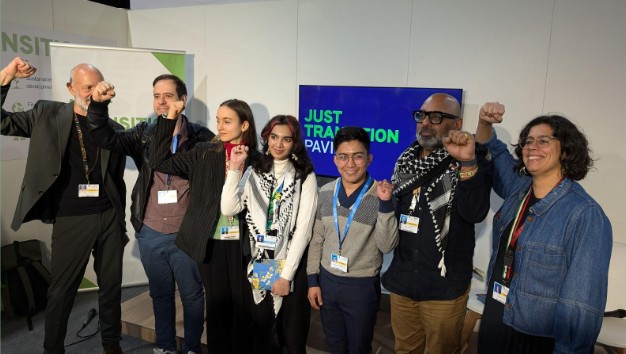
What does a just transition look like for Indigenous Peoples?
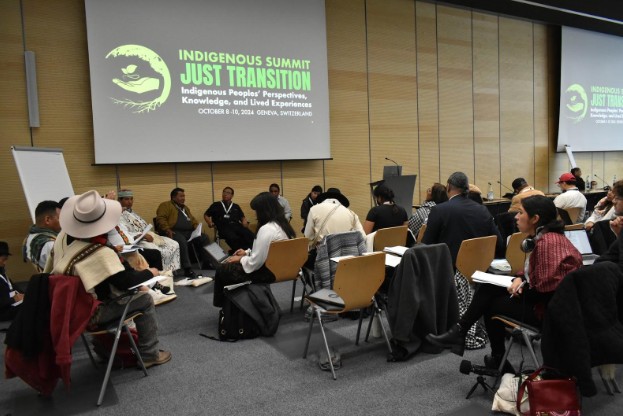
At the Indigenous Peoples Summit on Just Transition in Geneva, nearly 100 Indigenous leaders from all seven socio-cultural regions of the world agreed on a first-ever document to define what a just energy transition means from an Indigenous perspective to ensure the transition is fair and equitable.
To guide the way forward, Indigenous Peoples have articulated 11 foundational principles for a just transition:
- Right to Life – Respecting our physical and spiritual integrity and our right to exist, now and in the future.
- Self-Determination & Sovereignty – Upholding our right to govern ourselves, define our development, and steward our lands.
- Decolonization – Dismantling colonial systems and extractive policies that harm Indigenous Peoples and the Earth.
- Reparations & Land Back – Returning lands and making reparations for historical and ongoing harm.
- Respect for Indigenous Lifeways – Protecting food sovereignty, languages, cultures, and ecological knowledge systems.
- Transparency & Accountability – Ensuring Indigenous Peoples lead and monitor projects that affect their territories.
- Historical Reparations – Recognizing and addressing the full extent of past injustices through Indigenous-defined processes.
- Protection of Environmental Defenders – Ending violence and criminalization against Indigenous defenders.
- Recognition as Stewards & Guardians – Acknowledging our central role in climate and biodiversity protection.
- Maintaining the 1.5 °C Goal – Supporting Indigenous-led efforts to mitigate and adapt to climate change.
- Rights-Based Supply Chains – Ensuring that green supply chains do no harm to Indigenous Peoples or sacred ecosystems.
Indigenous Peoples are not calling for minor reforms to existing frameworks. What they demand is that their rights be respected across the full spectrum of human rights and Indigenous Peoples’ rights, as outlined in the UN Declaration on the Rights of Indigenous Peoples (UNDRIP). The outcome document from the Geneva Summit, “The Indigenous Peoples’ Principles and Protocols for a Just Transition”, presents a foundation rooted in ancestral knowledge, legal traditions, and relationships of reciprocity, community, care and responsibility with the natural world.
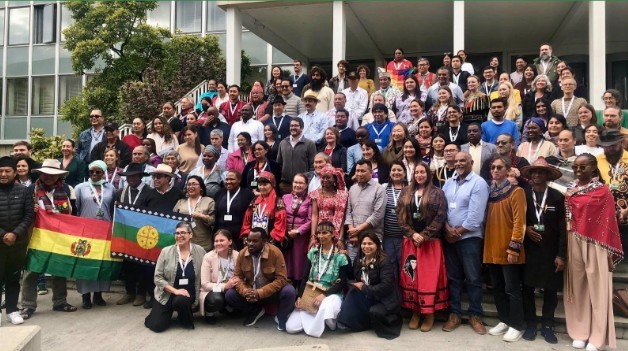
What Does A New Climate Action Paradigm Look Like?
The climate crisis demands more than shallow reforms or rebranded market solutions, it demands a fundamental shift in how we relate to the Earth, to one another, and to the systems we build. For too long, the dominant paradigm has treated climate change as a technical problem to be managed through carbon accounting, financial markets, and technological fixes that promise to save us. But these strategies, shaped by the same economic systems that created the crisis, have failed to deliver meaningful results. They prioritize profit over justice, growth over balance, and offsets over actual emissions reductions.
Nowhere was this more evident than at COP29, where the global community once again fell short. Indigenous Peoples and developing countries expressed deep frustration at the agreed-upon New Collective Quantified Goal (NCQG), which pledged $300 billion annually by 2035, a figure that remains far below what is needed. It not only fails to meet the scale of the crisis, but also perpetuates a model of climate finance that is inaccessible, profit-driven, and largely disconnected from the realities of those most impacted. Private sector investments are being prioritized over public obligations, while adaptation needs and Indigenous Peoples priorities are underfunded or ignored. Fossil fuel subsidies continue to dwarf climate finance, reaching $7 trillion in 2022 alone, more than twenty times the NCQG.
Even worse, the quality of climate finance remains deeply flawed. Most of the previous $100 billion target was delivered as loans, many non-concessional, deepening the debt burdens of developing nations. Indigenous Peoples, despite being some of the most effective land stewards and most impacted by climate change, receive less than 1% of climate finance directly. They are often treated as stakeholders rather than rights-holders, forced to navigate complex bureaucracies and intermediaries just to access support for our communities. The system is not broken, it was never built for us in the first place.
Carbon markets, promoted under Article 6 of the Paris Agreement, represent another false solution. These schemes enable polluters to continue emitting by purchasing credits that too often lack environmental integrity or respect for Indigenous rights. A 2023 study published in Nature found that only 16% of carbon credits represent real emissions reductions. Meanwhile, projects tied to carbon offsets have led to land grabs, displacement, and violations of Free, Prior and Informed Consent (FPIC). These markets commodify nature, reduce forests to carbon sinks for the wealthy, and open Indigenous territories to extractive schemes masked as conservation.
To move forward, we must reject these systems of harm and build a new climate action paradigm, one rooted in justice, Indigenous Peoples rights, and systemic transformation. Real solutions cannot be based on extraction, exploitation, or debt. They must be grounded in reciprocity, solidarity, community, and respect for the Earth. Climate finance must shift from loans to direct, grant-based support that reaches Indigenous communities without intermediaries or exploitative conditions. Dedicated mechanisms under the Green Climate Fund, Adaptation Fund and Loss and Damage Fund must be created to ensure this access.
This new paradigm must also abandon nature-based solutions that ignore the rights of Indigenous Peoples and the limits of ecological systems. Restoration, not offsets, must be the priority. That means investing in the protection of intact ecosystems, the rematriation of Indigenous lands, and community-led stewardship initiatives. It also means addressing the drivers of environmental harm, fossil fuels, industrial agriculture, and the mining of so-called transition minerals, rather than allowing them to expand under the banner of the “green” economy. And above all, Indigenous Peoples must be recognized not only as partners, but as leaders and rights-holders. Our knowledge systems offer tried and tested ways to live in balance with the land. Our governance systems protect biodiversity, water, and climate. We are not a special interest group to be consulted, we are nations with the right to determine our futures.
A just transition will not be delivered by markets or managed through vague commitments. It will come through bold structural change, through climate action that restores rather than extracts, that uplifts rather than marginalizes, and that is accountable to those who have protected the Earth since time immemorial. This is the paradigm shift we urgently need, not just for Indigenous Peoples, but for the future of all life on Earth.
The Strength of Our Collective Action
Even in the face of these daunting challenges, I find relief in knowing that I am not alone in this moment of history. Whether you are reading this from a remote Indigenous community, the comfort of your home, or an office in the middle of Warsaw, know that you are not alone either. These are shared problems that demand shared solutions, ones we must build together. There is strength in community, and there is power in collective action. That is what has kept my own community alive through more than 500 years of colonization. In my Indigenous community, we say “Pa kaii’ ta b’anaa’,” which means “dividing something in two.” It reflects our understanding that we don’t have to carry everything alone or solve every problem at once. By supporting one another, by each holding part of the weight, we become not only more effective, but more than anything, resilient.
And you can be certain of this: Indigenous Peoples are not waiting to be saved, we are leading the fight for true climate justice from our own territories, our own bodies, our own histories. We are standing our ground against expanding and consolidated corporate power. We are defending lakes, rivers, forests, oceans, and sacred sites, even as we face criminalization, surveillance, and violence. We are mobilizing in the streets, speaking at international summits, building community alternatives, and carrying the voices of our ancestors into decision-making spaces that were never designed for us.
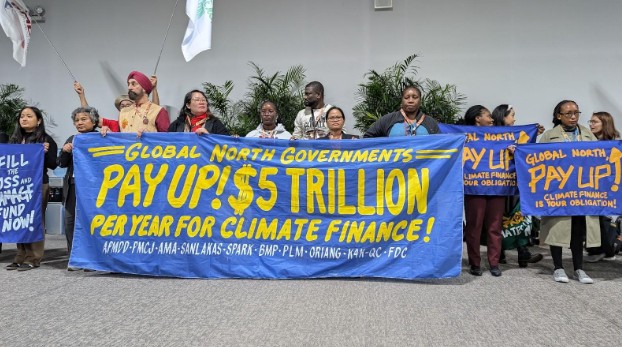
We are not passive observers to a collapsing system, we are at its gates, demanding justice. We are banging on the doors that have shut us out for too long, and we do so with songs, stories, prayers, and strategies. Those doors will not stand forever. Because with collective action, with the strength of our movements and the clarity of our vision, those doors will not just open, one day they will come crashing down.
Today, Indigenous Peoples’ resistance is not only shaping public discourse, it is reshaping corporate risk. Companies that ignore Indigenous rights and territorial sovereignty are more vulnerable than ever to a wide range of consequences. In a world of instant communication, growing investor scrutiny, and strengthened Indigenous advocacy, extractive industries and infrastructure developers face rising reputational, legal, operational, and financial risks. Delays, lawsuits, divestment campaigns, community opposition, and shareholder actions are no longer isolated incidents, they are becoming patterns. And these patterns are being driven by the growing visibility, coordination, and strength of Indigenous Peoples movements.
One of the clearest examples is the resistance to the Dakota Access Pipeline (DAPL), led by the Standing Rock Sioux Tribe. The Tribe opposed the pipeline’s construction through their ancestral territory and under the Missouri River, their primary water source, citing the threat it posed to water quality, sacred sites, and treaty rights. What followed was one of the most significant Indigenous-led mobilizations in recent history. Thousands of people, representing over 300 tribal nations, along with environmentalists, veterans, faith leaders, and allies, joined under the banner of #NoDAPL. The resistance camps at Standing Rock became powerful sites of spiritual, cultural, and political action. This unity delayed construction for months, forced a federal environmental review, and brought international attention to Free, Prior and Informed Consent (FPIC).
The impact went far beyond political visibility. The opposition raised the project’s cost from $3.8 billion to over $4.3 billion due to delays, legal challenges, and increased security costs. It also sparked a global divestment movement, with financial institutions like ING and DNB Bank pulling out of the project, and cities such as Seattle and San Francisco cutting ties with banks involved in funding the pipeline. In total, over $5 billion in financial commitments were withdrawn or reassessed due to Indigenous-led pressure. Although the pipeline eventually went into operation, Standing Rock left a lasting legacy, it built transnational coalitions, strengthened Indigenous legal advocacy, and changed how companies and investors evaluate social risk.
Another landmark case was the destruction of Juukan Gorge in 2020. In Western Australia, mining giant Rio Tinto deliberately destroyed a 46,000-year-old sacred site belonging to the Puutu Kunti Kurrama and Pinikura Peoples, despite their repeated objections. The site was among the most archaeologically and spiritually significant in the region, representing continuous human habitation dating back tens of thousands of years. The backlash was swift and global. Rio Tinto’s CEO and senior executives were forced to resign, major investors publicly rebuked the company, and a parliamentary inquiry was launched, leading to reputational damage that continues to shape Rio Tinto’s public image and investor relations to this day.
Together, these cases demonstrate that Indigenous resistance carries material consequences. We are not only defending our lands and cultures, we are changing the cost-benefit calculations for companies that rely on colonial models of extraction. Our voices, our actions, and our coalitions are making it harder for industries to treat Indigenous Peoples as obstacles. Instead, they are being forced to recognize us as powerful rights-holders and global actors. And as long as corporations and governments continue to disregard our consent, they will face consequences, not only in courts, but in markets, boardrooms, and public opinion.
The Path Forward
This is a spiritual crisis as much as it is a climate crisis, a biodiversity crisis, and a pollution crisis. We are living within a system that is collapsing under the weight of its own disconnection, from land, from community, from future generations. The symptoms are everywhere: more than 70% of global wildlife populations have been lost since 1970; temperatures surpassing the 1.5°C threshold; plastics not only in our oceans and soils, but in our own bodies. These are not isolated issues, they are the visible consequences of a worldview that has commodified nature and walked away from its responsibilities.
The path forward begins by healing our relationships, with the Earth and with one another. Indigenous Peoples have always known that land is not a resource, but a relative. That water is a sacred being. That justice is not something to be negotiated through markets or metrics, but something we live through reciprocity, gratitude, solidarity, balance, and responsibility. These are not abstract ideas. They are the foundation of another way to live, one that has kept our communities resilient through centuries of violence and dispossession.
If you want to support Indigenous Peoples, learn about us, about our values and knowledge systems, and our relationships with the land. Share our stories, so that more people can hear from us. Support the struggle of Indigenous land and human rights defenders so that they can continue doing their vital work. Remunerate the knowledge of Indigenous Peoples, not as a transaction but as an act of justice. Support us by helping to open decision-making spaces for us, especially for Indigenous women. Help us by challenging systems that oppress us, not just Indigenous Peoples, but all of us.
 Bryan Bixcul (Maya-Tz’utujil), Global Coordinator, comes to SIRGE Coalition after serving for three years at Cultural Survival, where he served as Executive Assistant, Executive Coordinator and Advocacy Coordinator. Bryan has experience advocating for Indigenous Peoples rights at the CBD and UNFCCC. Bryan also serves in the Indigenous Advisory Group to the Banks and Biodiversity Initiative.
Powiązane artykuły
 Zuzanna Borowska: Behind the Scenes of Climate Diplomacy
 Young, Bold, and Under-Supported: Why Youth Climate Movements in the Global South Deserve More Than Just Applause
 RAZEM, ABY OCALIĆ SZAREGO WILKA: KAMPANIA 'EUROPEAN ACTION WOLVES’
 Warsaw Climate Talks: Odtworzone mokradła jako szansa dla klimatu i rolnictwa
 Story from a small island community.
Jeśli nie zaznaczono inaczej, materiał nie może być powielany bez zgody redakcji.